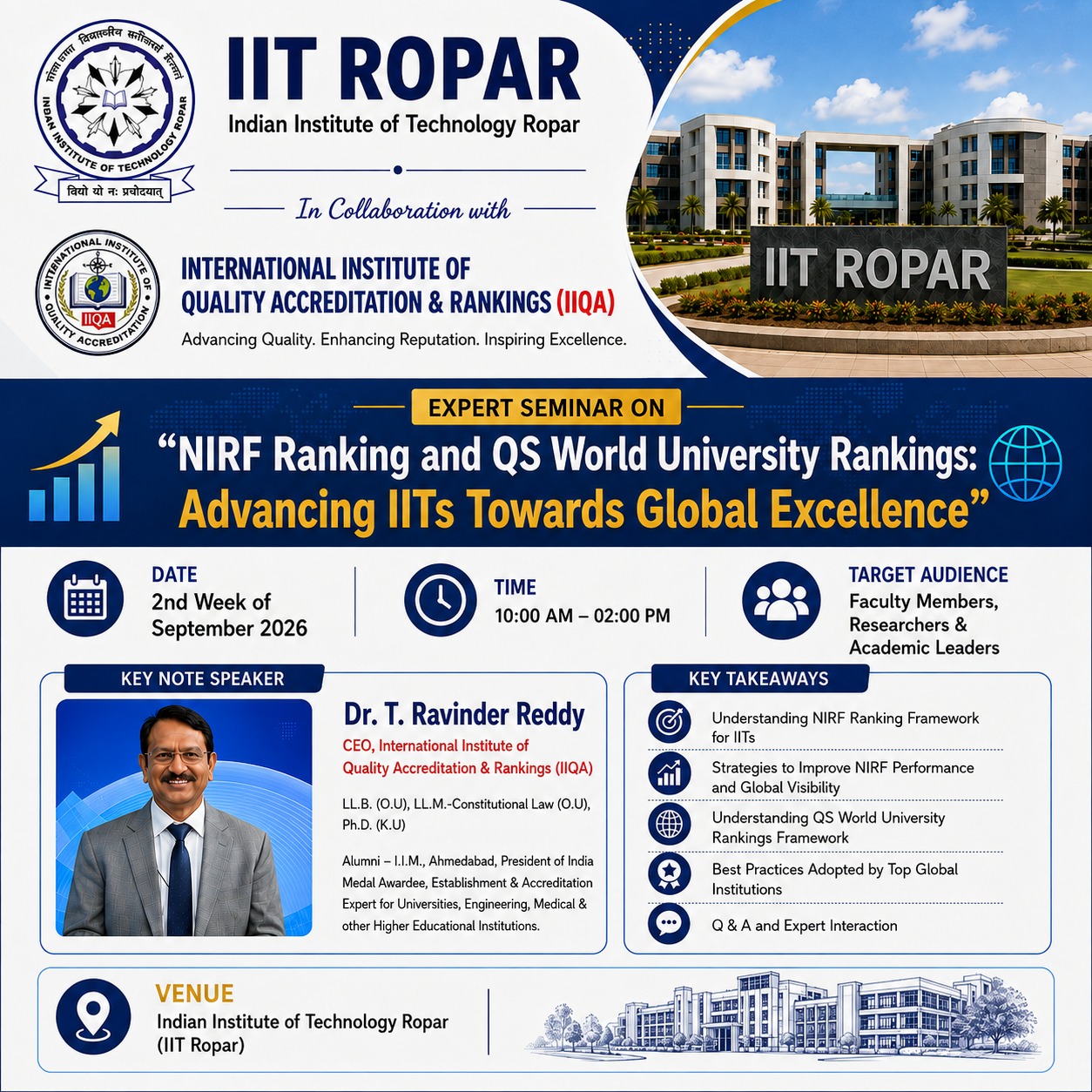
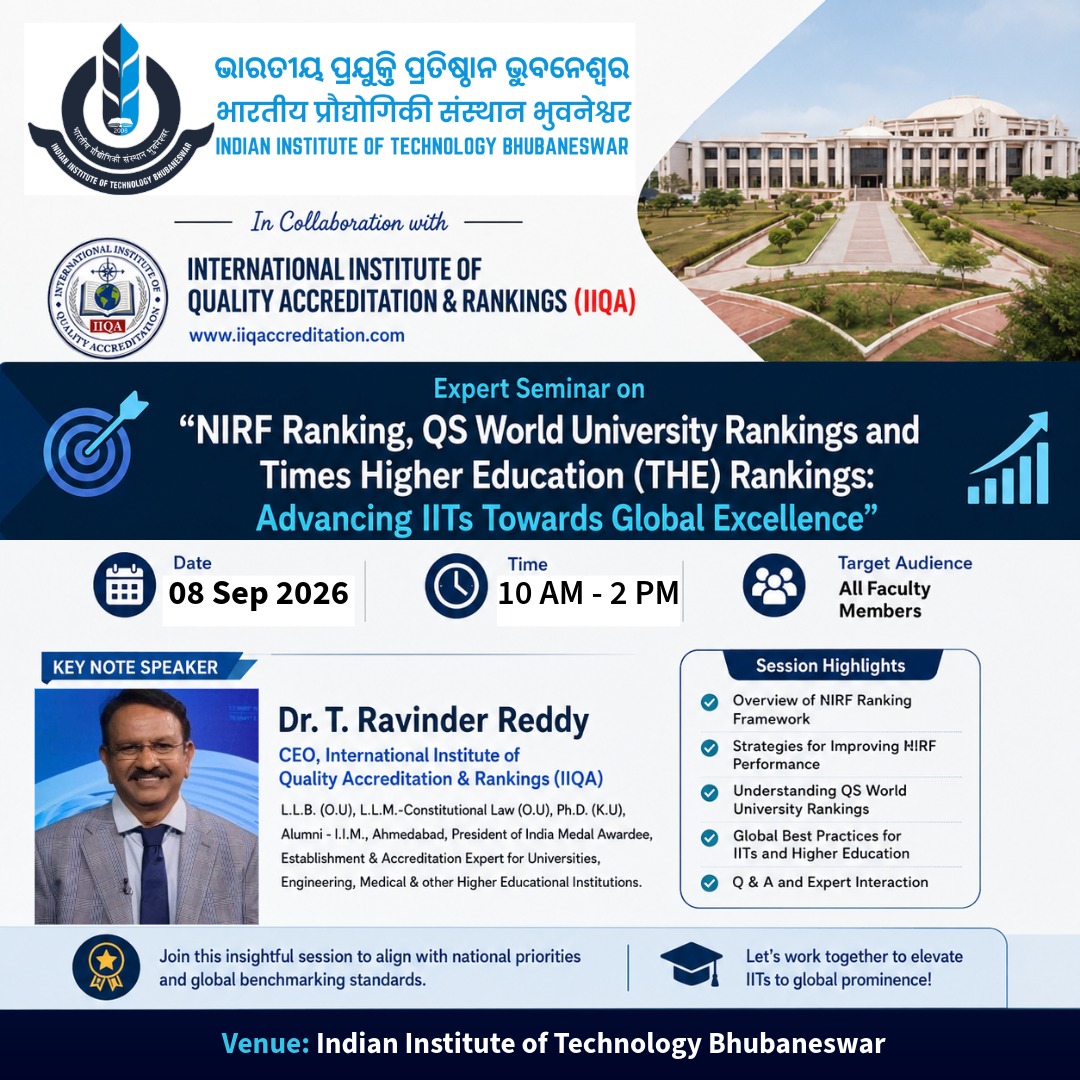
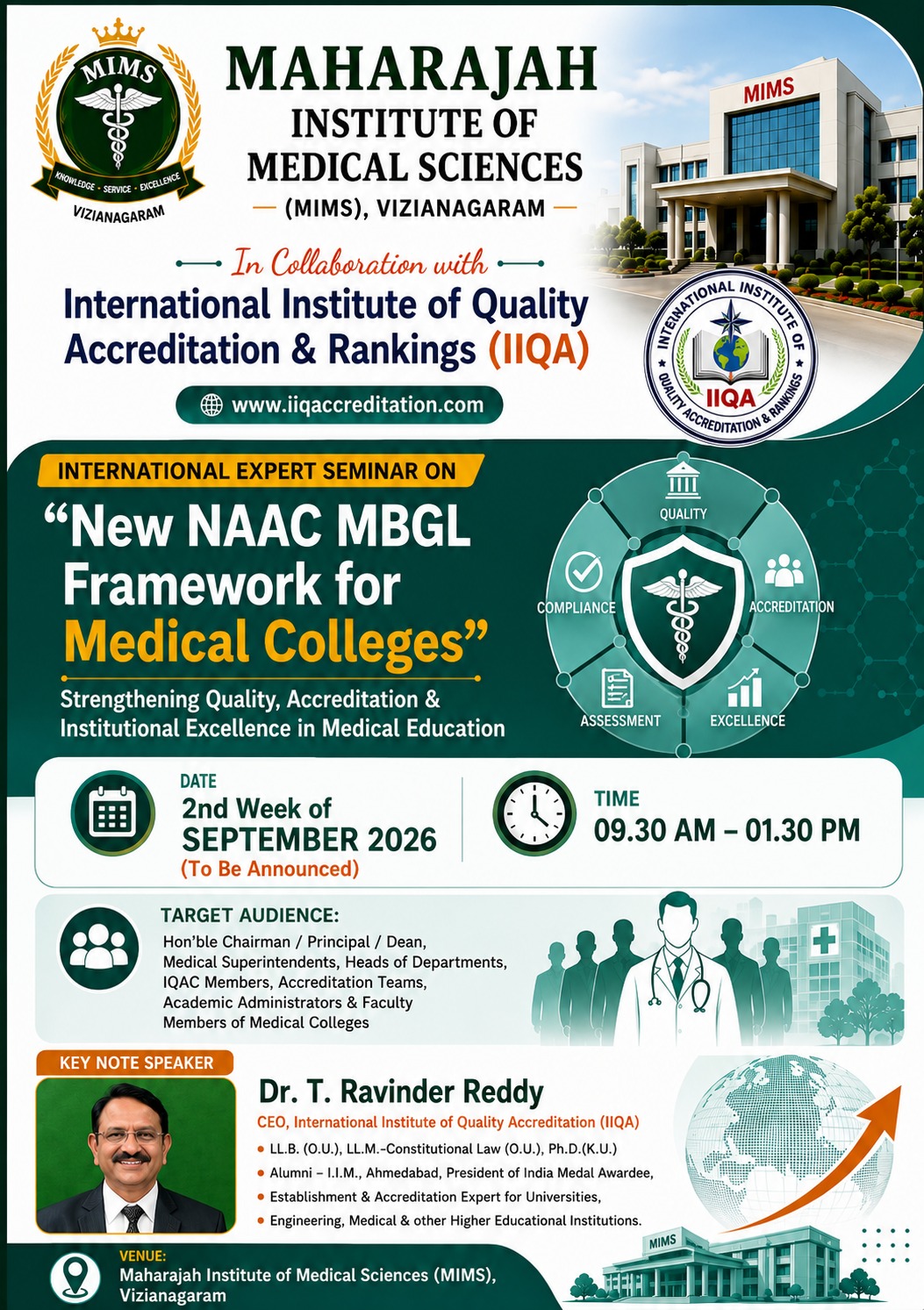
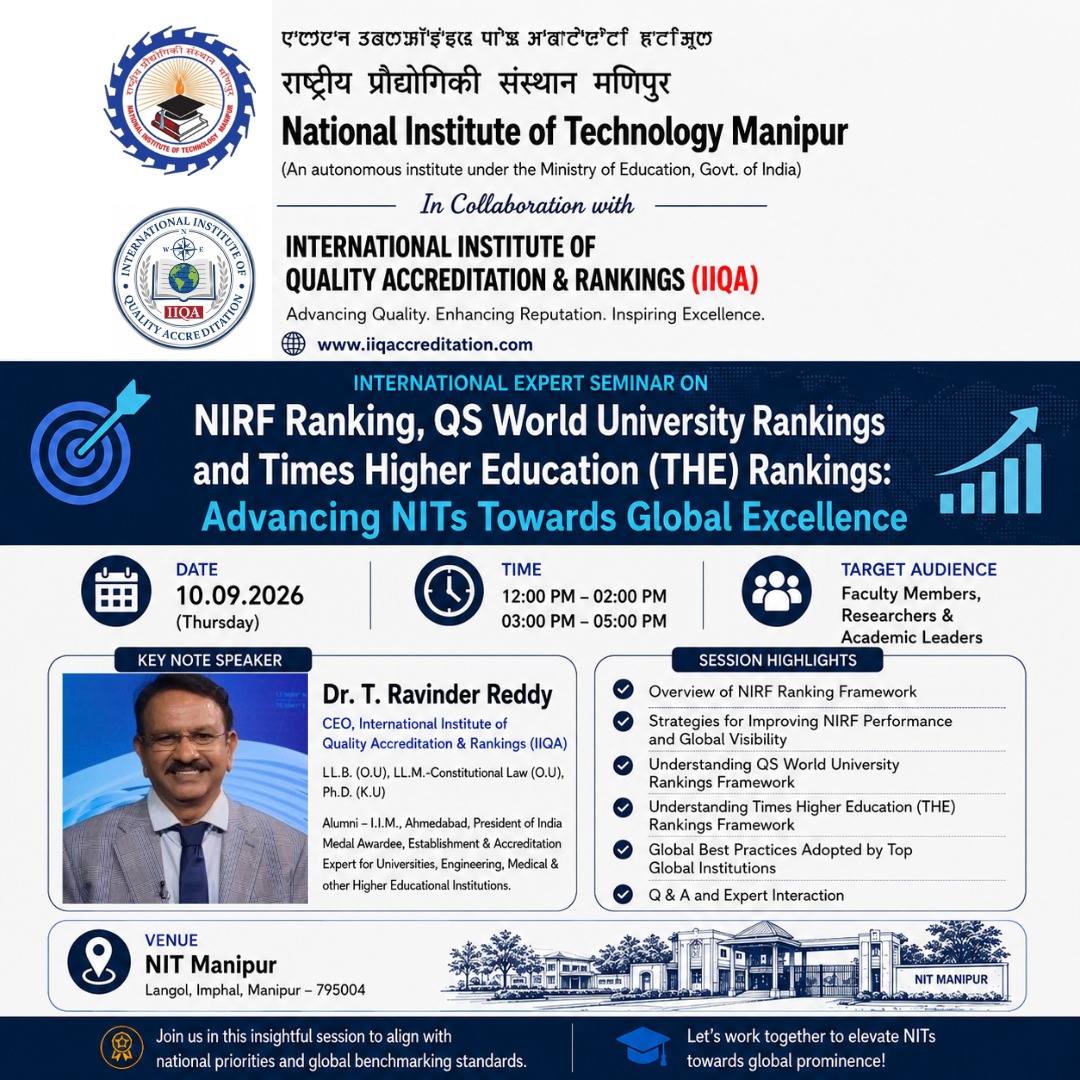
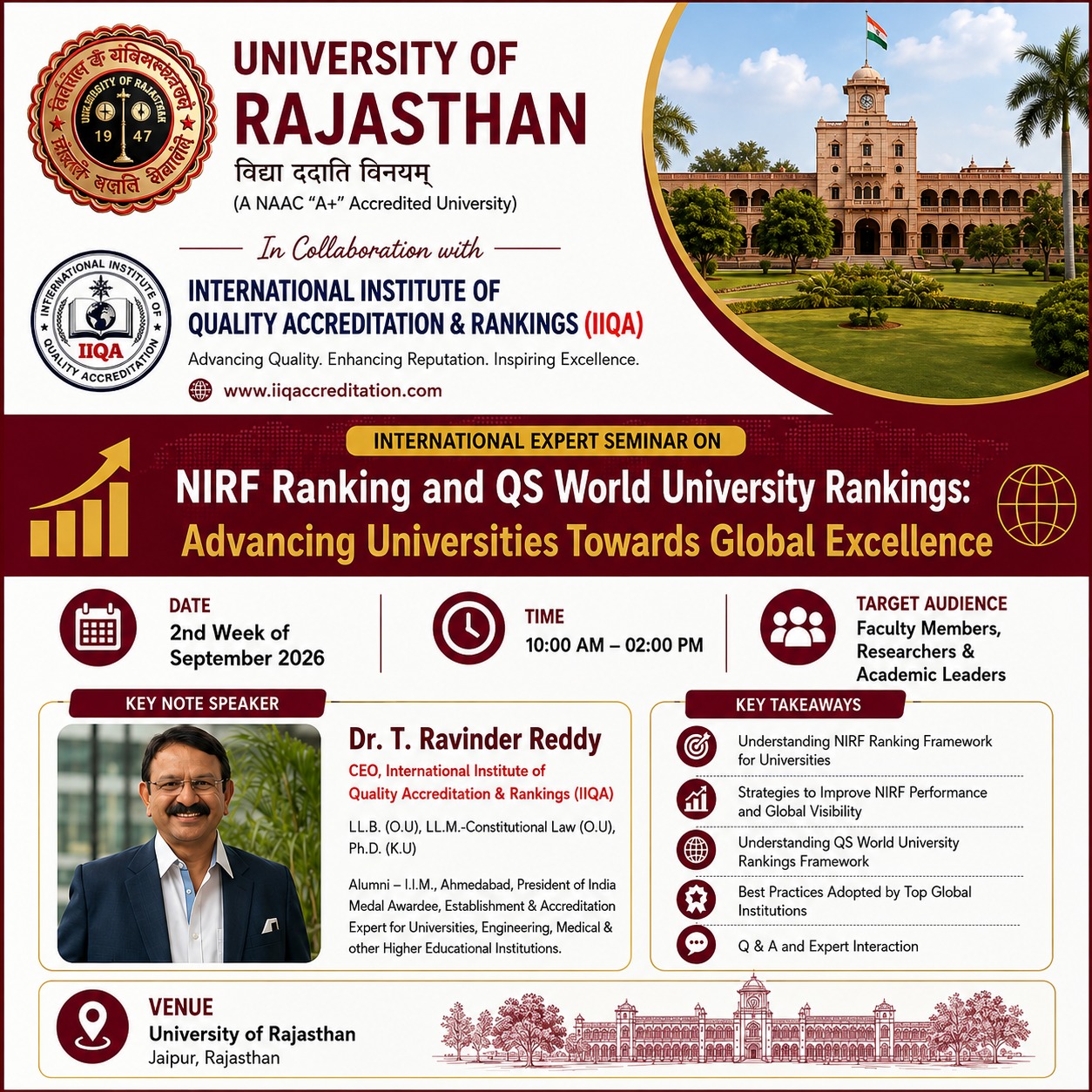
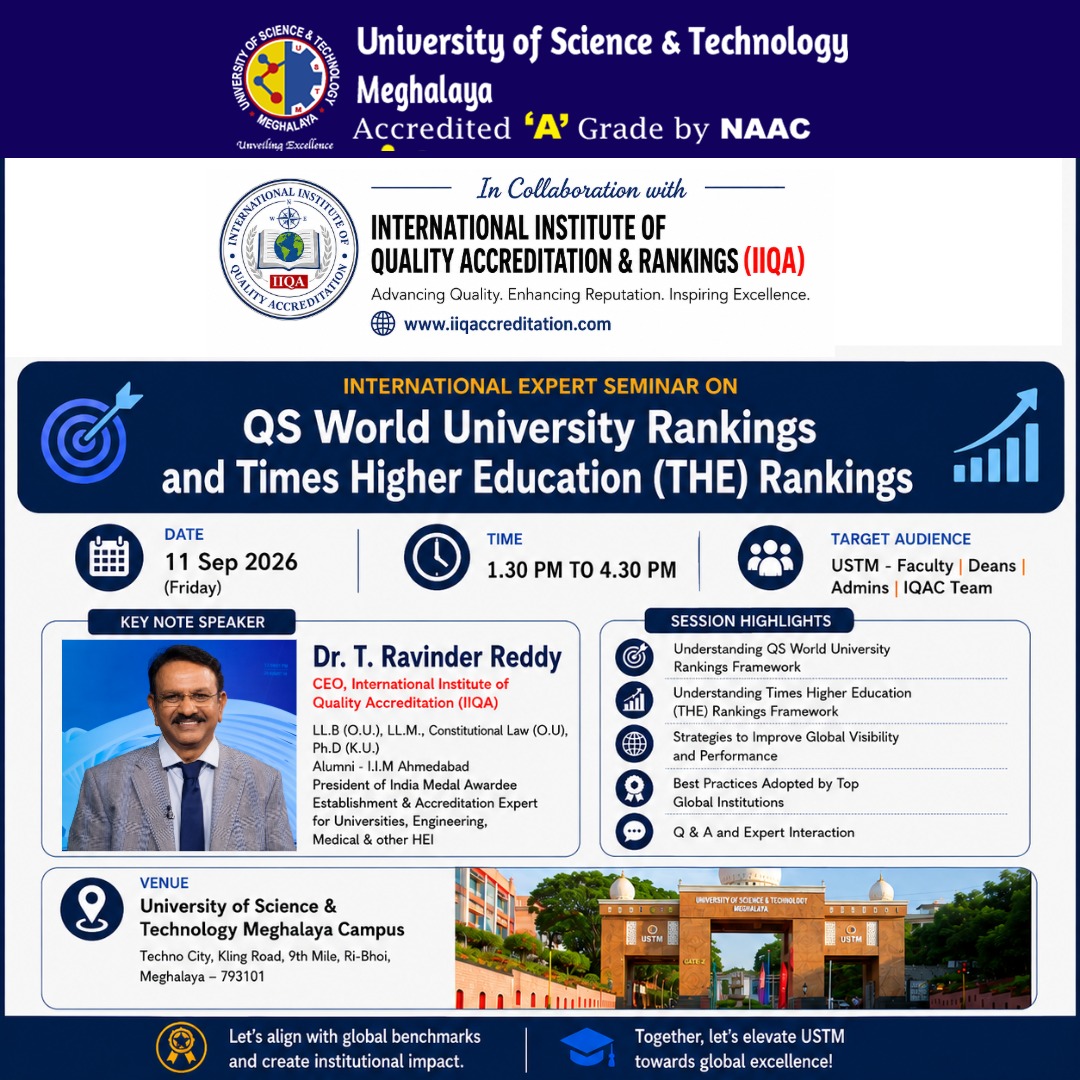
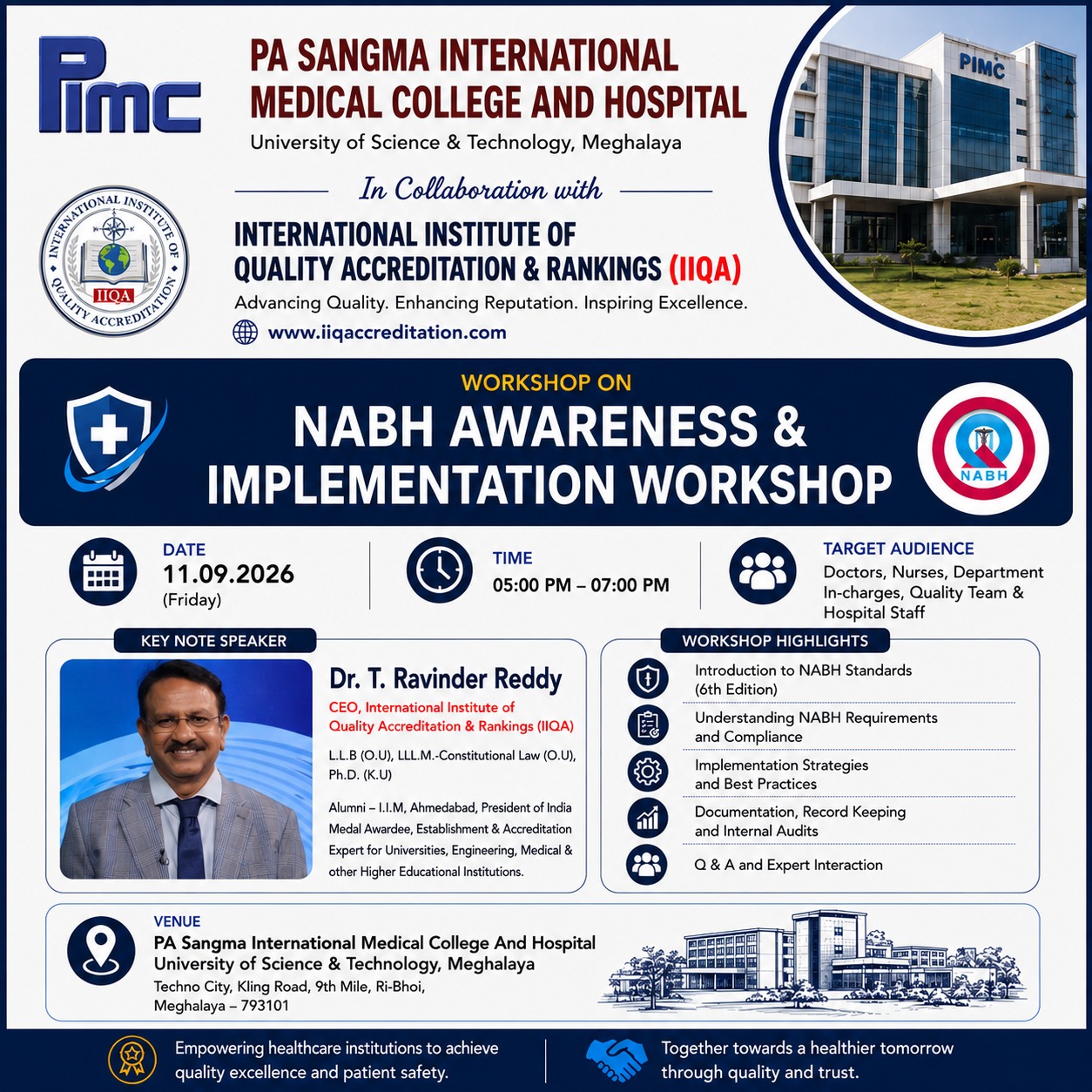
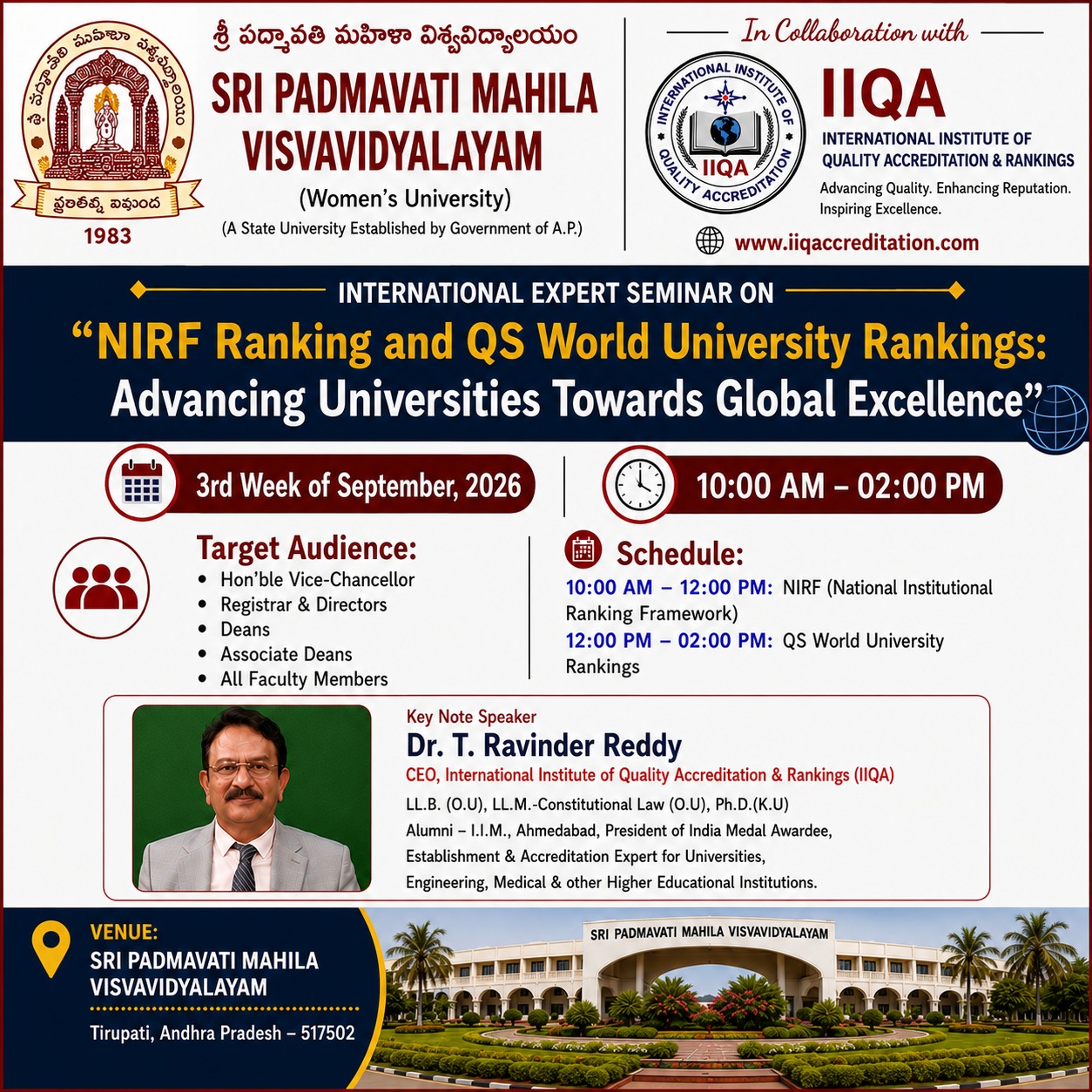
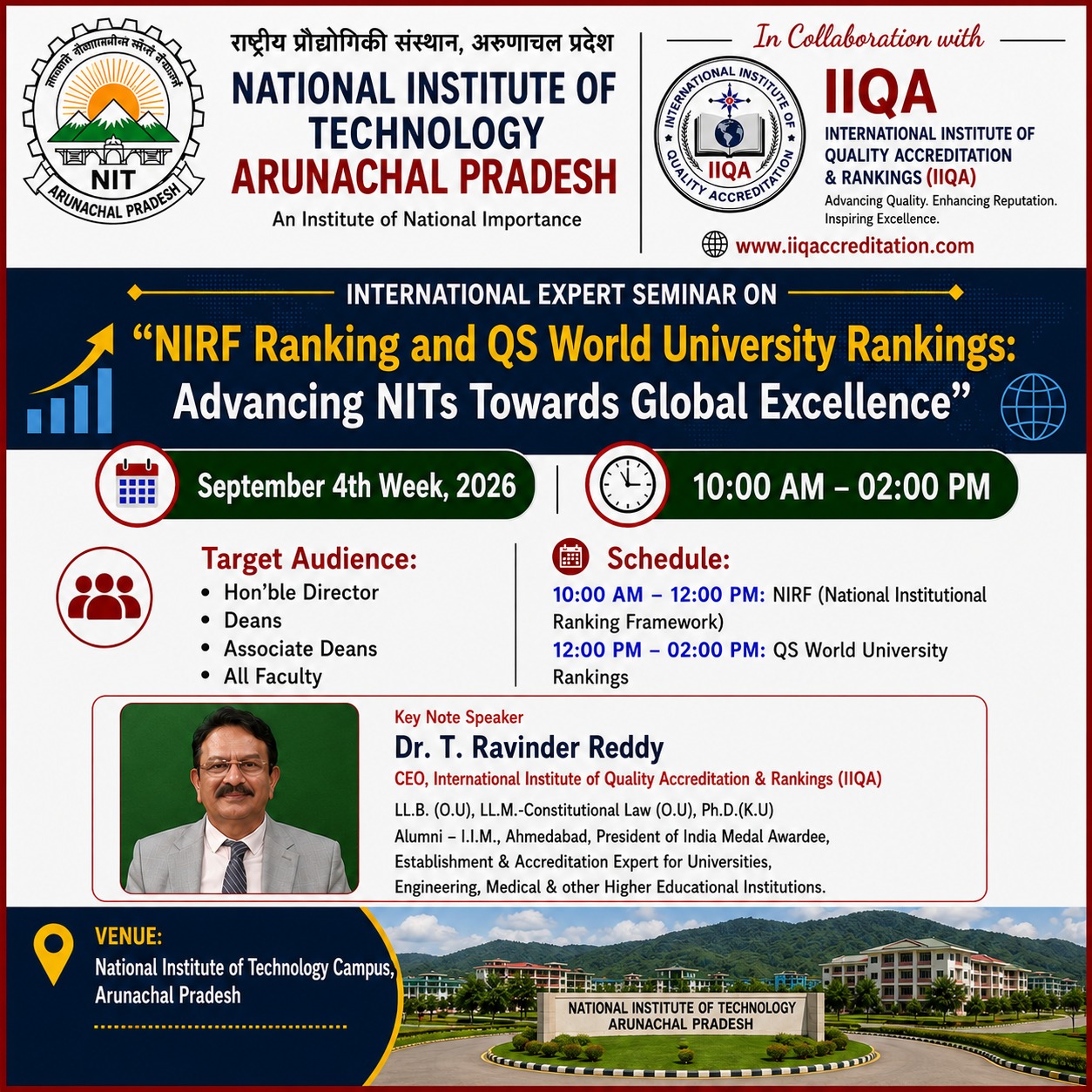
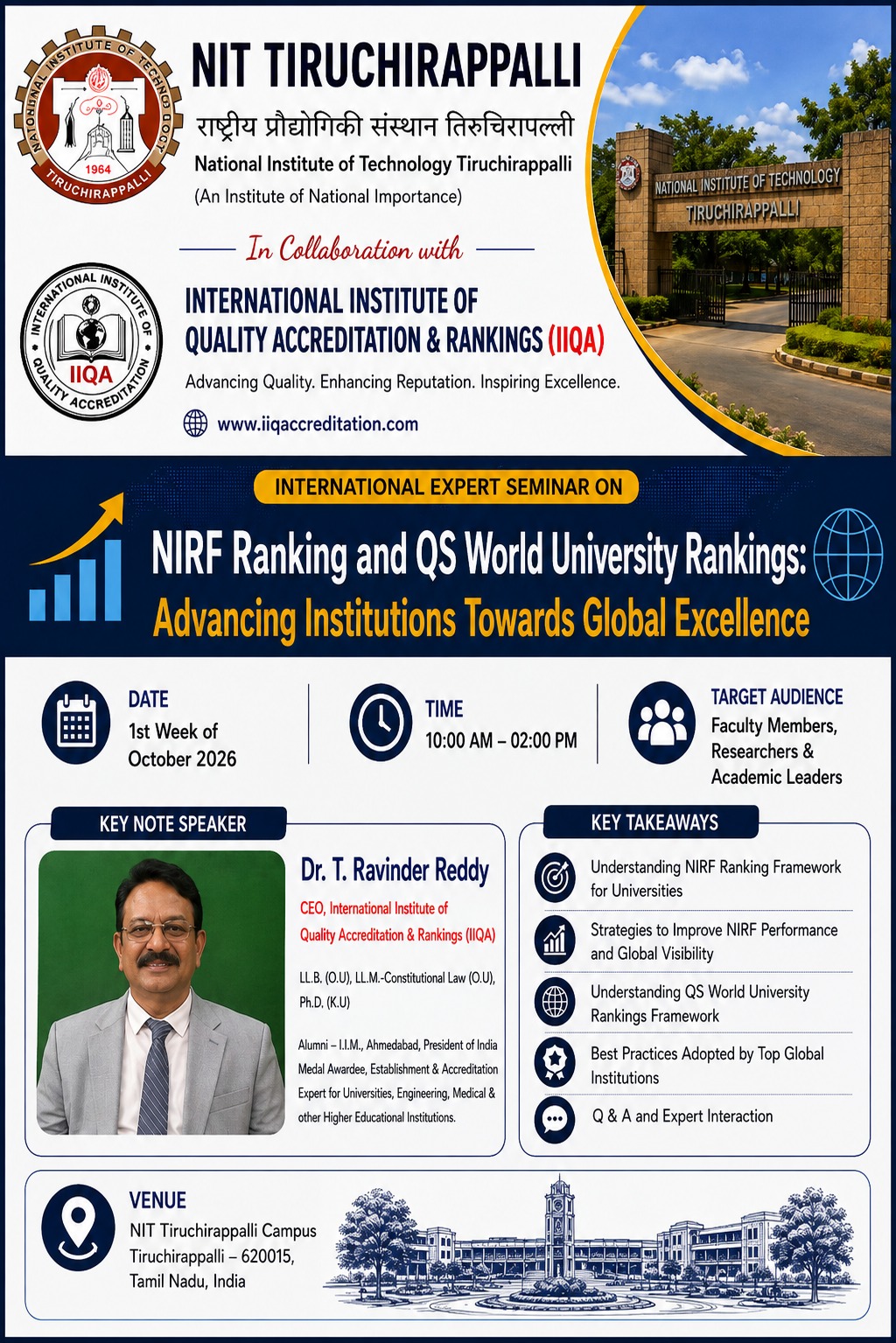
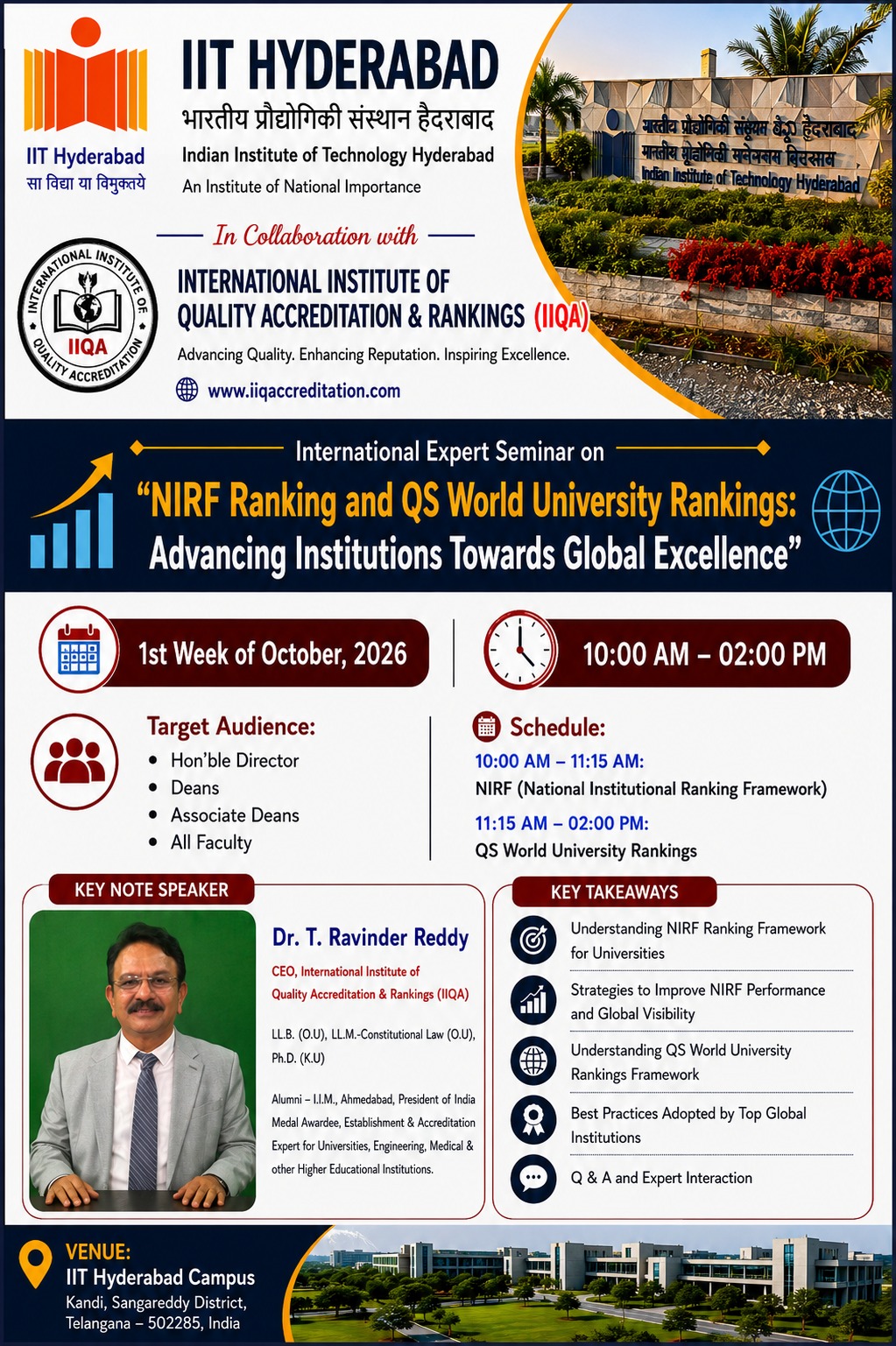
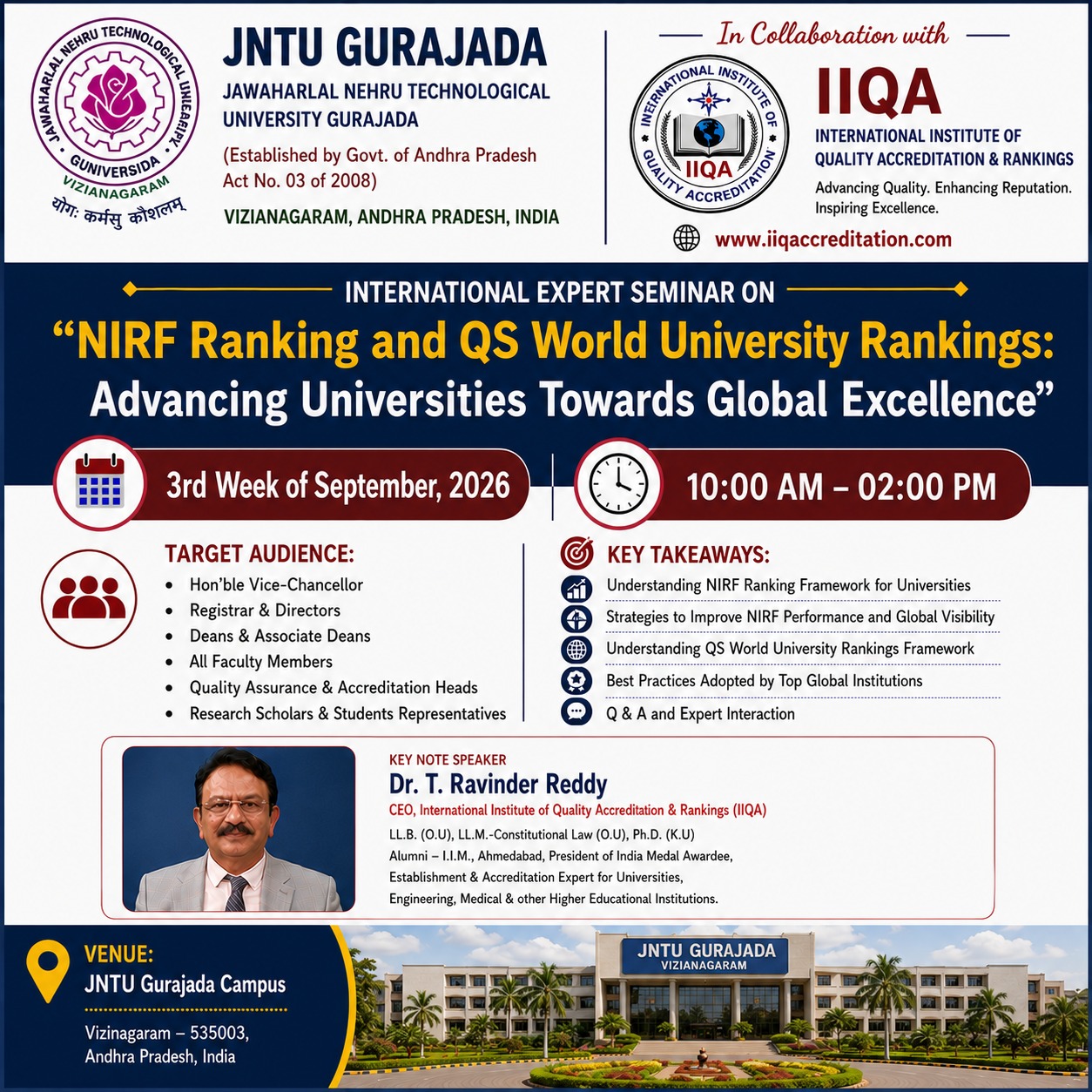
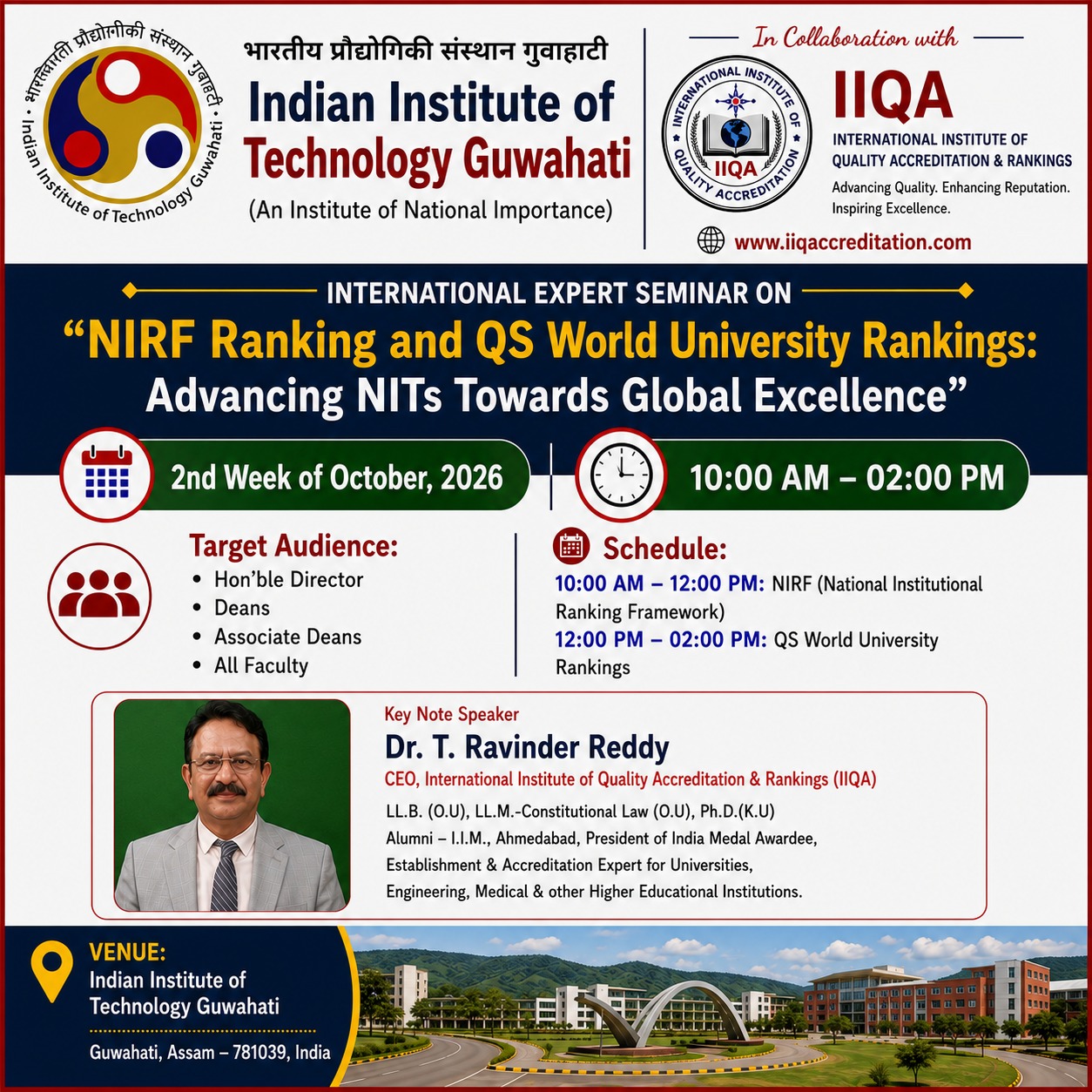
As higher education becomes increasingly competitive and globally interconnected, university rankings have emerged as an important benchmark for measuring institutional quality, research excellence, academic reputation, and international impact. Universities across the world are striving to improve their performance in prestigious ranking frameworks such as the QS World University Rankings, Times Higher Education (THE) World University Rankings, and India's National Institutional Ranking Framework (NIRF).
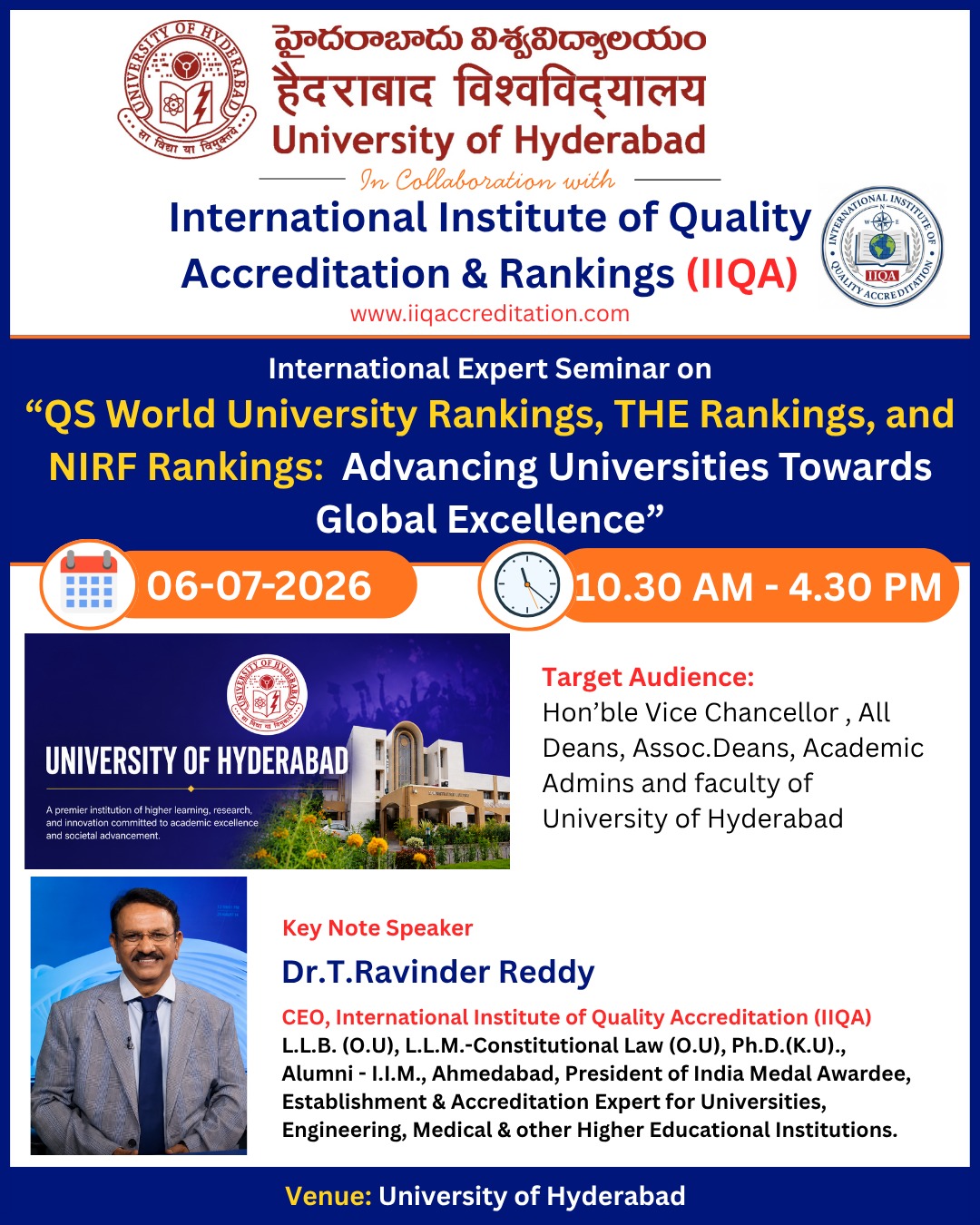
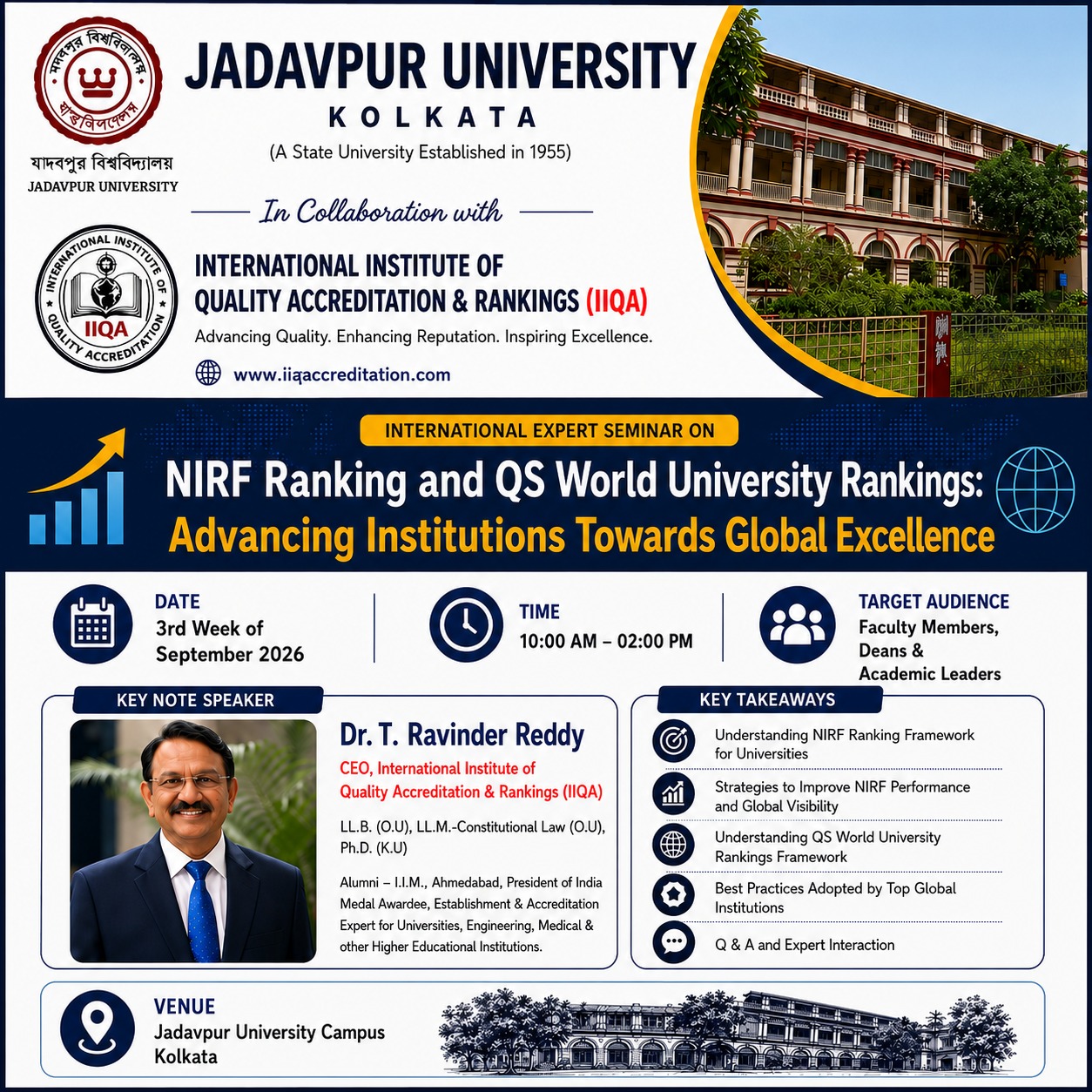
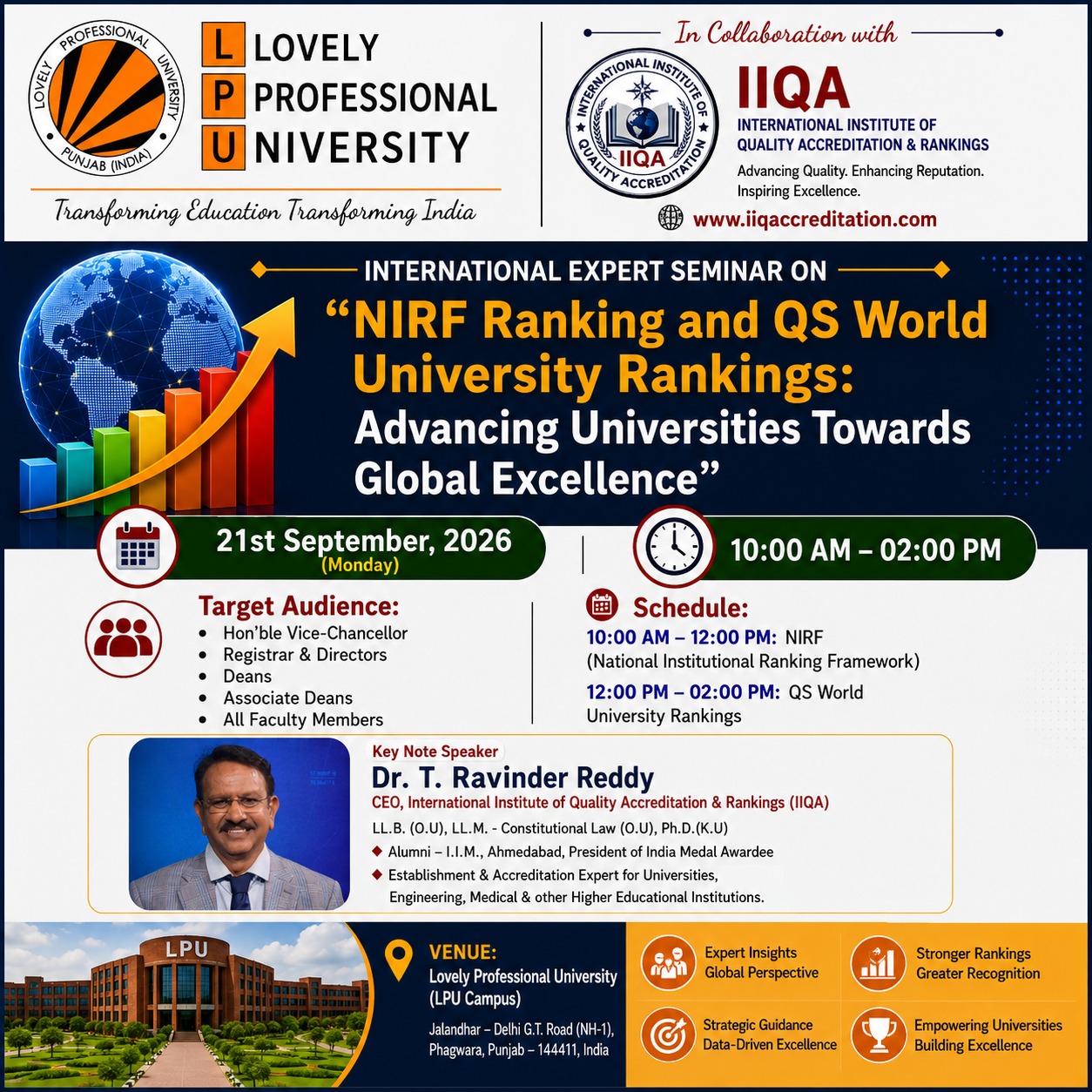
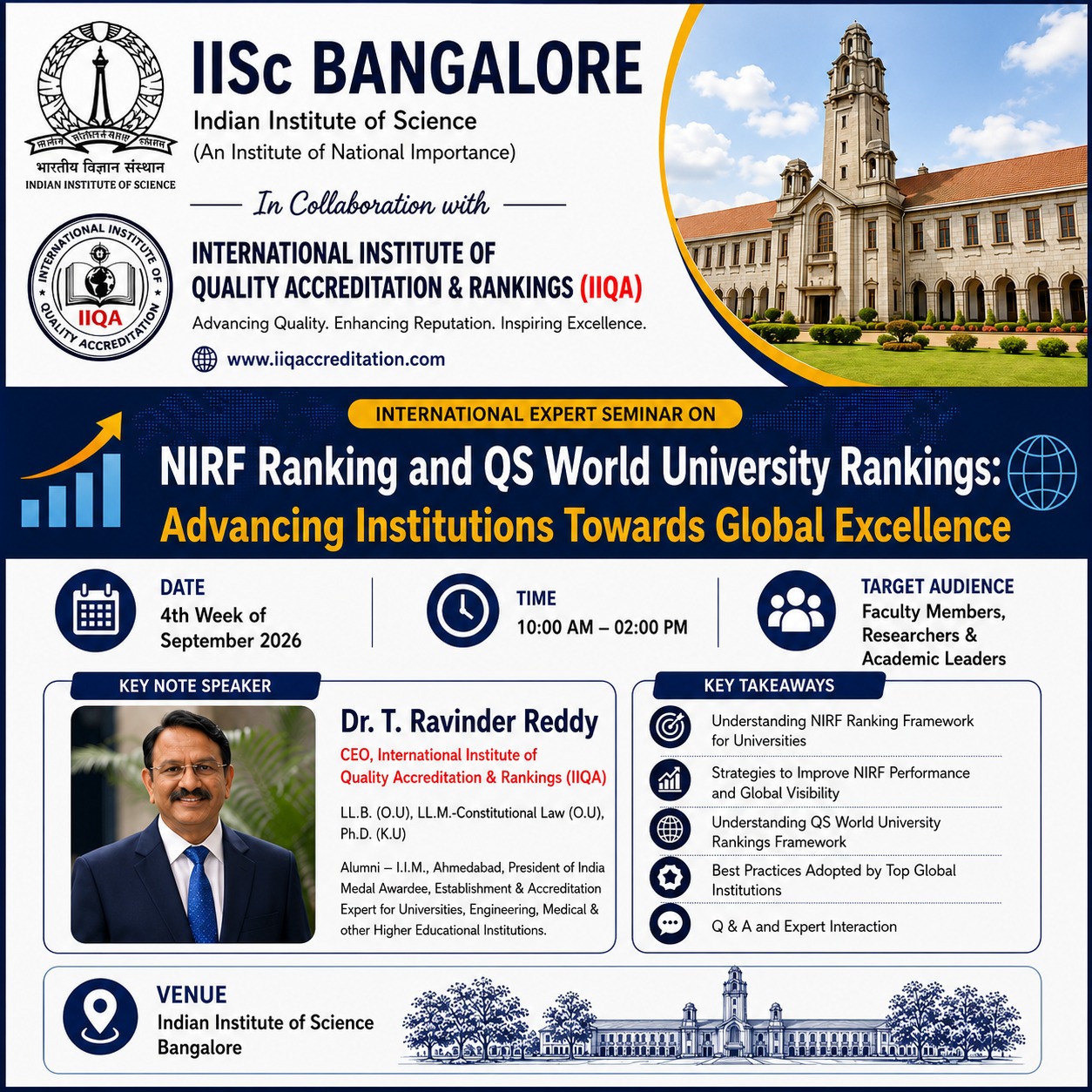
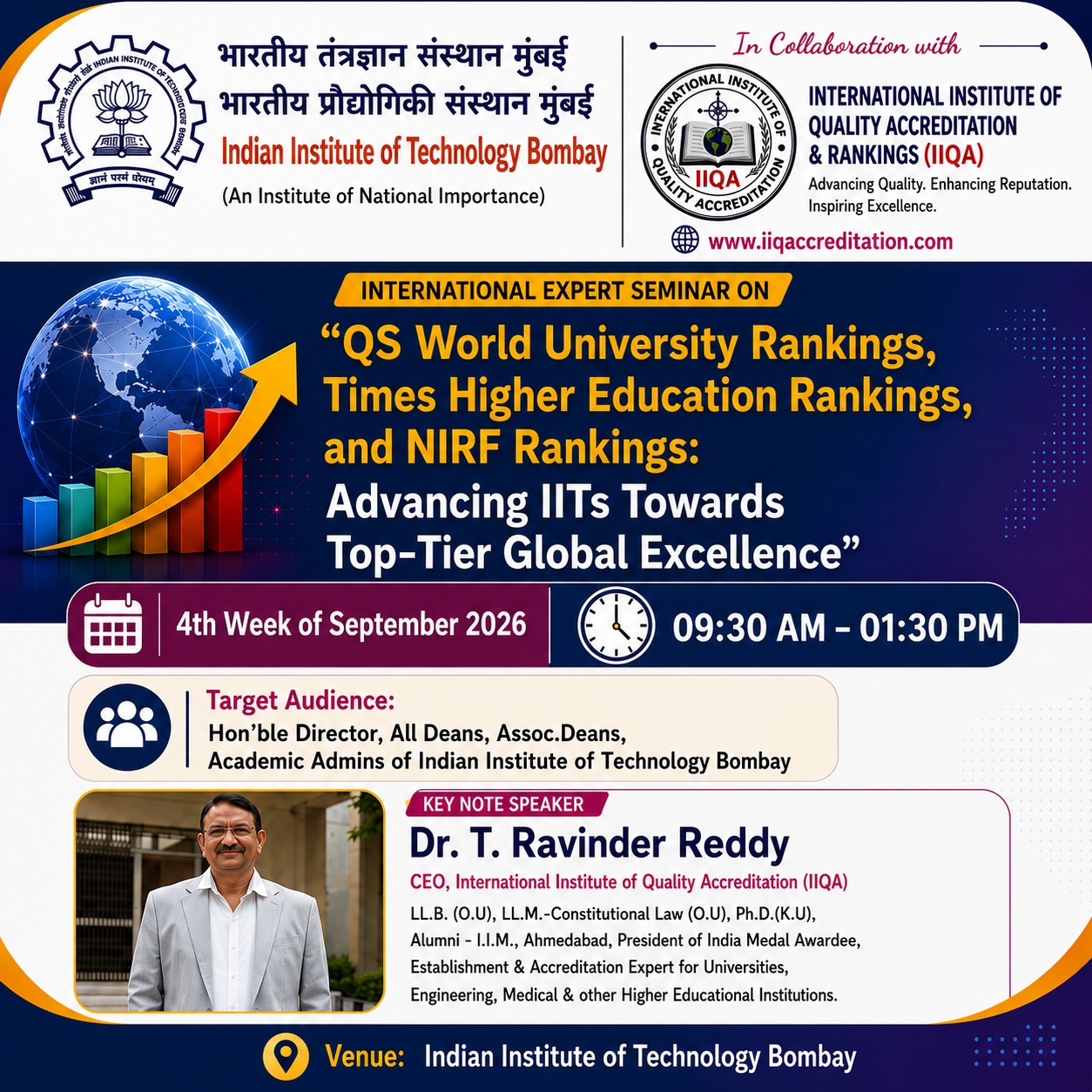
Recognizing the growing importance of these ranking systems, the University of Hyderabad, in collaboration with the International Institute of Quality Accreditation & Rankings (IIQA), is organizing an International Expert Seminar on “QS World University Rankings, THE Rankings, and NIRF Rankings: Advancing Universities Towards Global Excellence.”
Scheduled on 06 July 2026 at the University of Hyderabad, the seminar aims to provide valuable insights into ranking methodologies, institutional benchmarking, accreditation practices, and strategies that can help universities enhance their national and international standing.
About the University of Hyderabad
The University of Hyderabad (UoH) is one of India's most prestigious central universities, known for its excellence in teaching, research, innovation, and interdisciplinary education. Established by an Act of Parliament, the university has built a strong reputation for academic rigor and research contributions across multiple disciplines.
Over the years, the University of Hyderabad has consistently earned recognition among India's leading higher education institutions and has achieved notable positions in various national ranking systems. The university is widely respected for:
- High-quality academic programs
- Strong research output and innovation
- Distinguished faculty members
- International collaborations
- Student diversity and inclusivity
- Commitment to academic excellence
As a research-intensive institution, the University of Hyderabad actively promotes quality enhancement initiatives and continuously strives to align itself with global standards in higher education. Hosting a seminar focused on QS, THE, and NIRF rankings reflects the university's commitment to institutional excellence and global competitiveness.
About the International Expert Seminar
The seminar has been designed to help academic leaders, faculty members, and administrators gain a comprehensive understanding of the ranking frameworks that influence higher education institutions worldwide.
The event focuses on three major ranking systems:
- QS World University Rankings
- Times Higher Education (THE) Rankings
- National Institutional Ranking Framework (NIRF)
Participants will gain insights into ranking methodologies, evaluation criteria, institutional performance indicators, and best practices that can contribute to long-term academic excellence.
The seminar also provides an opportunity for university stakeholders to understand how accreditation, research quality, internationalization, and governance contribute to improved ranking performance.
Why University Rankings Matter Today
University rankings have become an essential tool for measuring institutional effectiveness and quality. They influence how universities are perceived by students, faculty, employers, researchers, governments, and international partners.
Enhancing Academic Reputation
Strong rankings increase a university's visibility and credibility within the academic community. Institutions that perform well are often viewed as leaders in education and research.
Attracting High-Quality Students
Students frequently consider ranking performance when selecting universities. Better rankings often lead to increased admissions and stronger student demand.
Strengthening Research Opportunities
Ranking systems evaluate research productivity and impact, encouraging universities to invest in innovation and scholarly contributions.
Building International Collaborations
Universities with strong rankings are more likely to establish partnerships with leading global institutions.
Improving Employability Outcomes
Employers often associate highly ranked universities with quality education and skilled graduates, enhancing career opportunities for students.
Understanding NIRF Rankings
What is NIRF?
The National Institutional Ranking Framework (NIRF) is India's official ranking system for higher education institutions. Developed by the Ministry of Education, NIRF provides a standardized framework for evaluating colleges and universities across the country.
Key NIRF Parameters
Teaching, Learning and Resources (TLR)
This parameter evaluates faculty strength, student enrollment, infrastructure, and financial resources.
Research and Professional Practice (RP)
Research publications, citations, patents, and sponsored projects are assessed under this category.
Graduation Outcomes (GO)
The framework measures student success through graduation rates, placements, and higher education progression.
Outreach and Inclusivity (OI)
Diversity, inclusiveness, and accessibility are considered important indicators.
Perception (PR)
Public perception and academic reputation contribute to overall rankings.
Importance of NIRF Rankings
NIRF rankings help institutions benchmark their performance against national standards while identifying opportunities for improvement.
Understanding QS World University Rankings
The QS World University Rankings are among the most respected global ranking systems and are widely referenced by students, researchers, and academic institutions worldwide.
Academic Reputation
QS evaluates how universities are perceived by academics across the globe.
Employer Reputation
Employers provide feedback on the quality and employability of graduates.
Faculty-to-Student Ratio
This indicator reflects teaching quality and academic support.
Citations per Faculty
Research impact is measured through scholarly citations.
International Faculty Ratio
The diversity of academic staff contributes to ranking performance.
International Student Ratio
The ability to attract students from around the world is also considered.
Benefits of Higher QS Rankings
Universities with strong QS rankings often experience:
- Increased international recognition
- Enhanced student enrollment
- Greater research collaborations
- Improved global reputation
Understanding Times Higher Education (THE) Rankings
The Times Higher Education World University Rankings assess institutions using a comprehensive set of performance indicators.
Teaching
Measures the quality of the learning environment and educational experience.
Research Environment
Evaluates research productivity, funding, and reputation.
Research Quality
Assesses the impact and influence of scholarly work.
Industry Income
Measures collaboration with industry and knowledge transfer activities.
International Outlook
Evaluates global engagement through international students, faculty, and partnerships.
Why THE Rankings Matter
THE rankings provide universities with valuable insights into their global competitiveness and institutional strengths.
Seminar Highlights
The seminar offers an opportunity for participants to gain practical knowledge about ranking frameworks and institutional quality enhancement.
Key Areas of Discussion
- Understanding ranking methodologies
- Improving institutional performance
- Enhancing research productivity
- Building academic reputation
- Internationalization strategies
- Accreditation and quality assurance
- Data management and reporting
- Best practices from leading institutions
Participants will also learn how universities can align their strategic plans with ranking requirements to achieve sustainable growth and recognition.
Keynote Speaker: Dr. T. Ravinder Reddy
The seminar will feature an expert session by Dr. T. Ravinder Reddy, CEO of the International Institute of Quality Accreditation & Rankings (IIQA).
Dr. Ravinder Reddy is a renowned establishment and accreditation expert with extensive experience in higher education quality systems. He has worked with universities, engineering institutions, medical colleges, and other educational organizations to strengthen academic quality and institutional performance.
His expertise includes:
- University accreditation
- Quality assurance frameworks
- Institutional governance
- Ranking improvement strategies
- Academic planning
- Higher education policy implementation
Through his keynote address, participants will gain practical guidance on improving ranking performance and achieving academic excellence.
The Role of Accreditation in Ranking Success
Accreditation and rankings are closely linked. Institutions that implement robust quality assurance systems often perform better in ranking assessments.
Benefits of Accreditation
- Strengthens institutional credibility
- Supports continuous improvement
- Enhances academic governance
- Encourages data-driven decision-making
- Aligns institutional practices with global standards
Quality-focused institutions are generally better prepared to meet ranking requirements and demonstrate excellence across evaluation parameters.
How Universities Can Improve Their Rankings
Focus on Research Excellence
Encourage high-impact publications, patents, and collaborative research projects.
Strengthen Faculty Development
Invest in professional development programs and research opportunities.
Improve Student Outcomes
Enhance placements, internships, and entrepreneurship initiatives.
Expand International Collaborations
Build partnerships with leading universities worldwide.
Promote Innovation
Support startups, incubation centers, and industry-driven research.
Develop Strong Quality Assurance Systems
Establish processes that continuously monitor and improve institutional performance.
Benefits for Academic Leaders and Faculty
The seminar is specifically designed for:
- Directors
- Deans
- Associate Deans
- Academic Administrators
- Faculty Members
- Researchers
- Quality Assurance Teams
Participants will gain practical knowledge that can help improve institutional planning, ranking performance, and quality enhancement initiatives.
Advancing Universities Towards Global Excellence
Achieving excellence in higher education requires more than strong academic programs. Universities must continuously evaluate their performance, strengthen research capabilities, embrace internationalization, and adopt global best practices.
By understanding the methodologies behind QS, THE, and NIRF rankings, institutions can identify improvement opportunities and create strategic roadmaps for sustainable growth.
The International Expert Seminar at the University of Hyderabad serves as a valuable platform for knowledge sharing and capacity building, empowering institutions to compete successfully in the global higher education landscape.
Conclusion
The University of Hyderabad, in collaboration with IIQA, is taking an important step toward promoting institutional excellence through its International Expert Seminar on QS World University Rankings, THE Rankings, and NIRF Rankings. The seminar will help academic leaders and higher education professionals understand ranking frameworks, accreditation practices, and quality enhancement strategies that contribute to national and international recognition.
As universities continue their pursuit of excellence, initiatives such as this seminar play a vital role in fostering awareness, strengthening institutional capabilities, and advancing higher education toward global standards.
FAQs
1. What is the purpose of the University of Hyderabad seminar?
The seminar aims to educate academic leaders and faculty about QS, THE, and NIRF ranking systems and strategies for improving institutional performance.
2. Why are university rankings important?
Rankings help measure academic quality, research performance, international reputation, and student outcomes.
3. What topics will be covered during the seminar?
The seminar covers QS Rankings, THE Rankings, NIRF Rankings, accreditation, research excellence, and institutional quality enhancement.
4. Who is the keynote speaker?
Dr. T. Ravinder Reddy, CEO of IIQA and a recognized accreditation expert, will deliver the keynote session.
5. How do rankings benefit universities?
Strong rankings improve reputation, attract students, support research collaborations, and enhance global visibility.
6. How does accreditation support ranking performance?
Accreditation strengthens quality assurance systems and helps institutions meet many of the performance indicators used in ranking frameworks.