In today's rapidly evolving higher education landscape, academic institutions must continuously strengthen their quality standards, governance systems, research performance, and student outcomes to remain competitive. Accreditation and ranking frameworks have become essential tools for measuring institutional excellence and promoting continuous improvement.
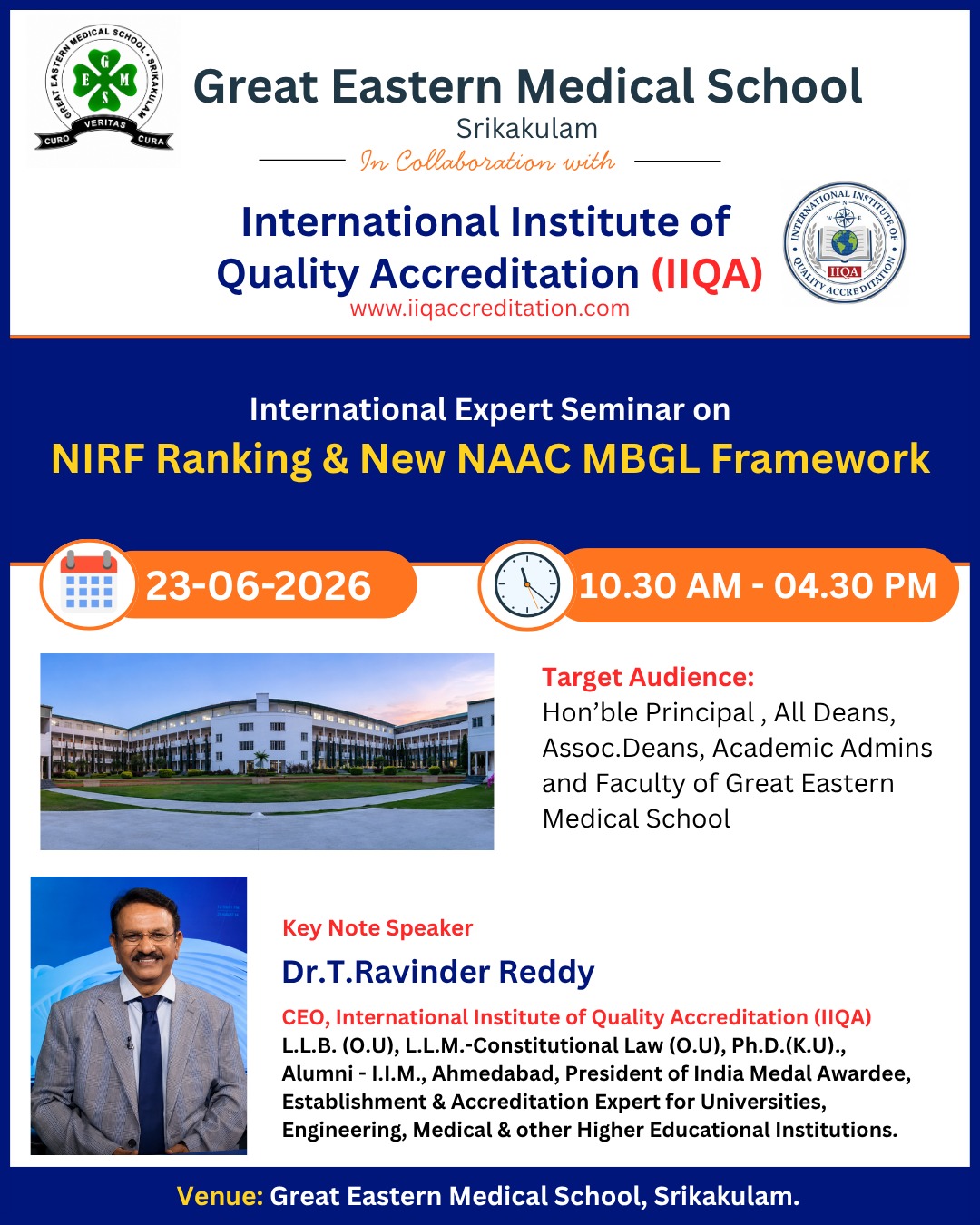
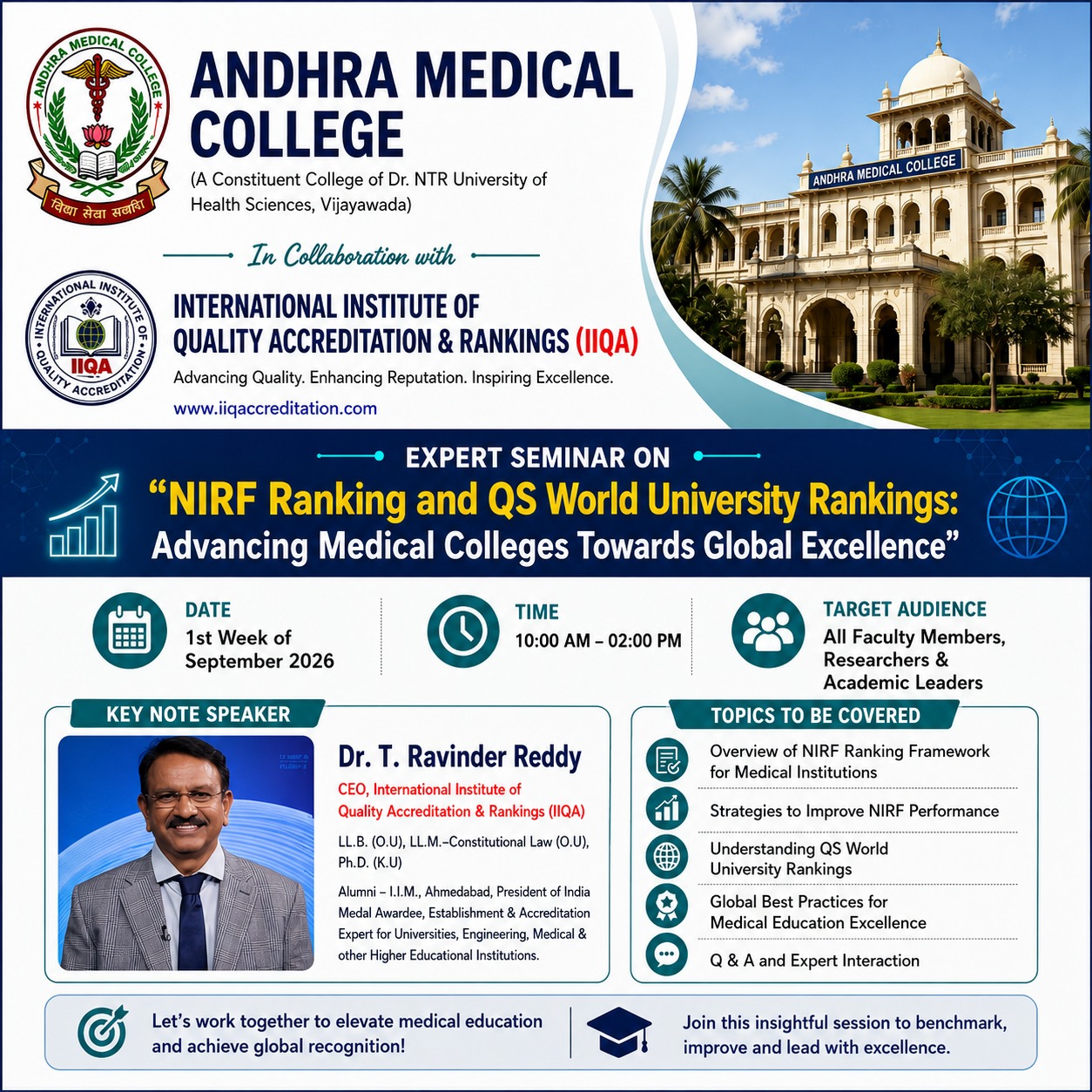
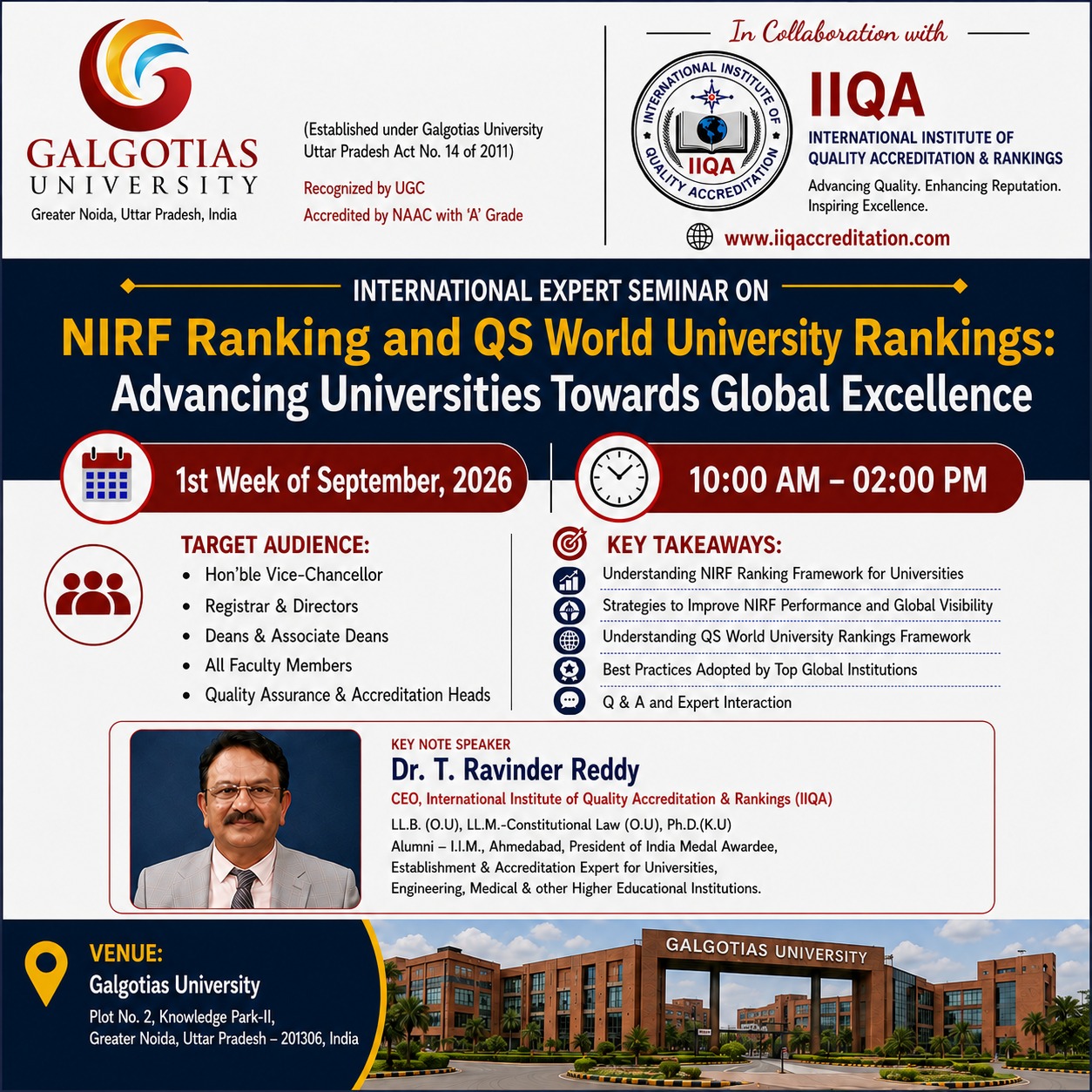
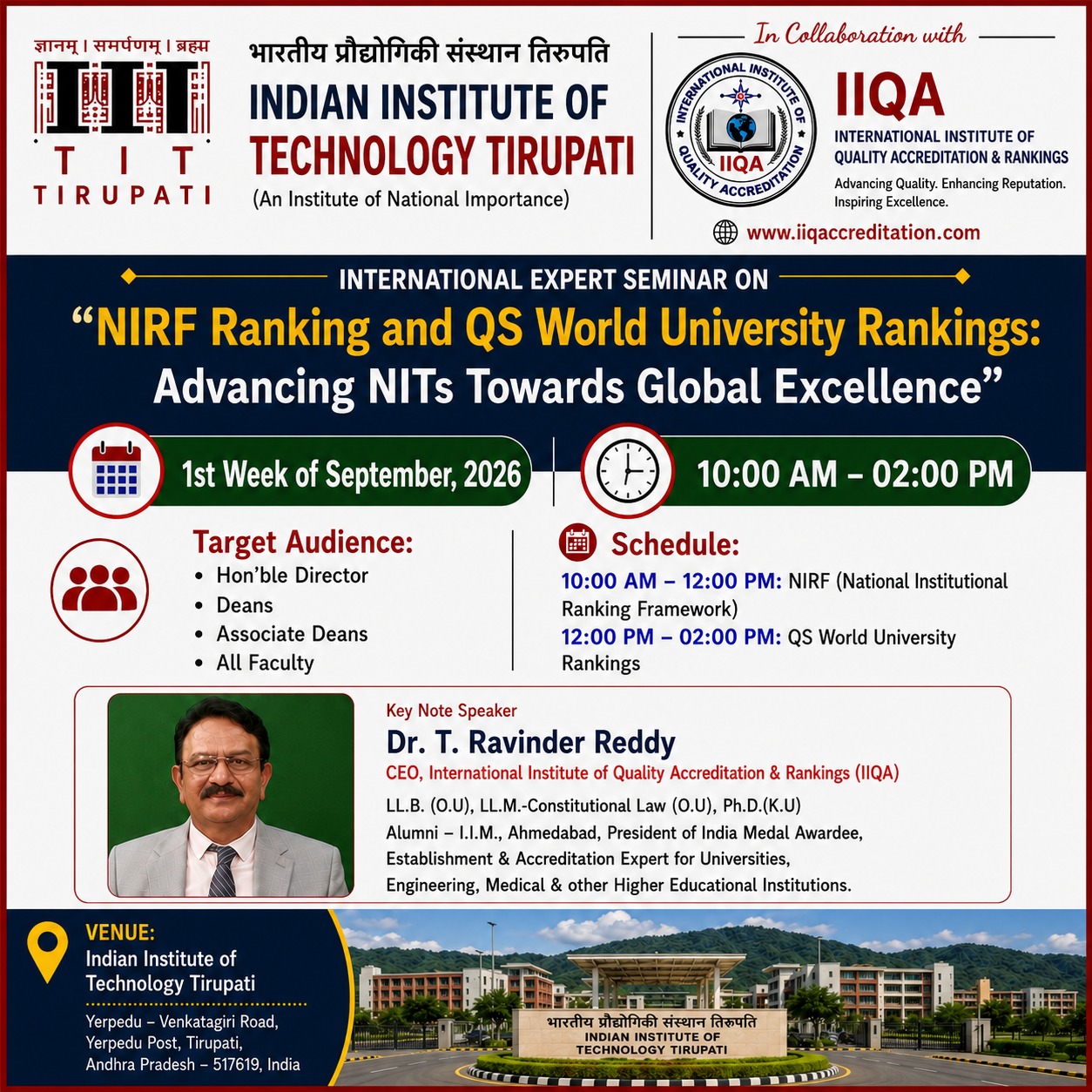
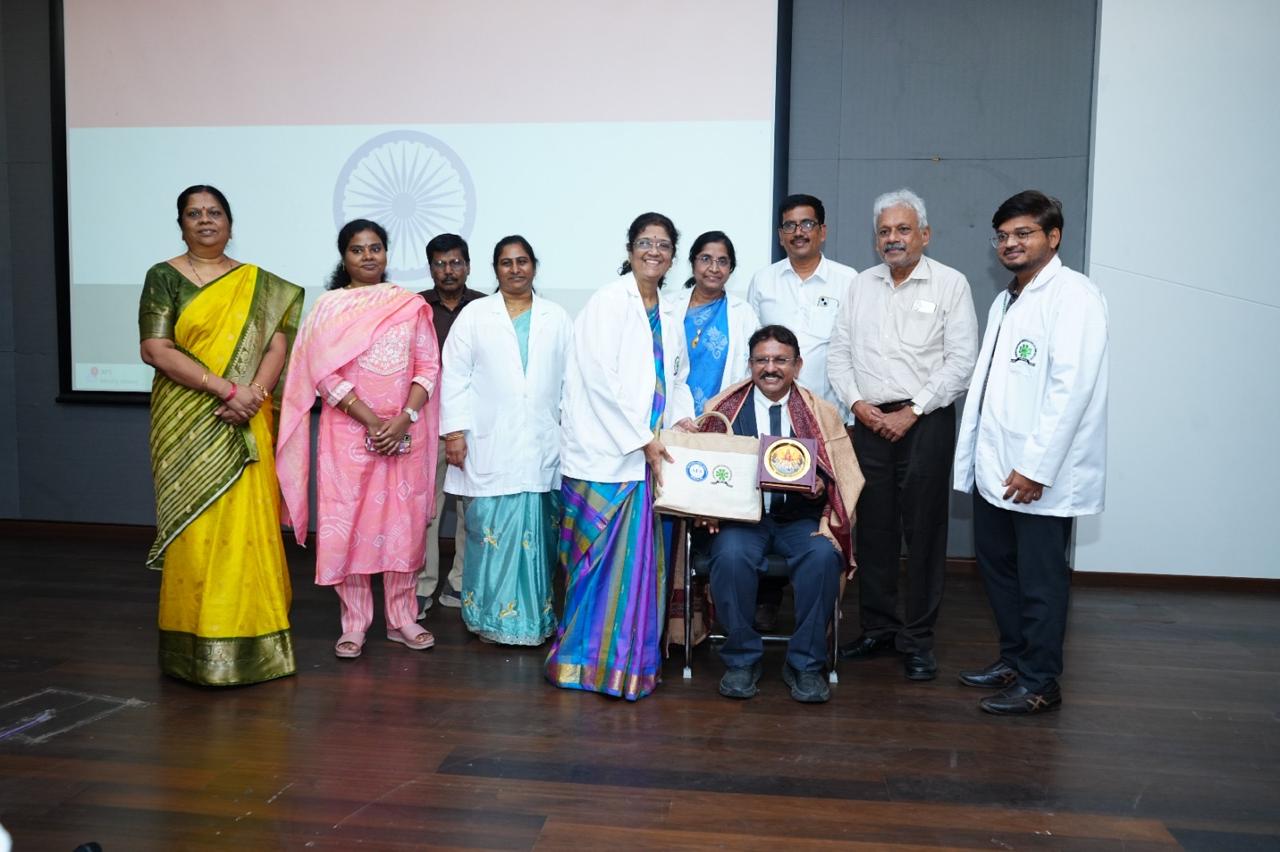
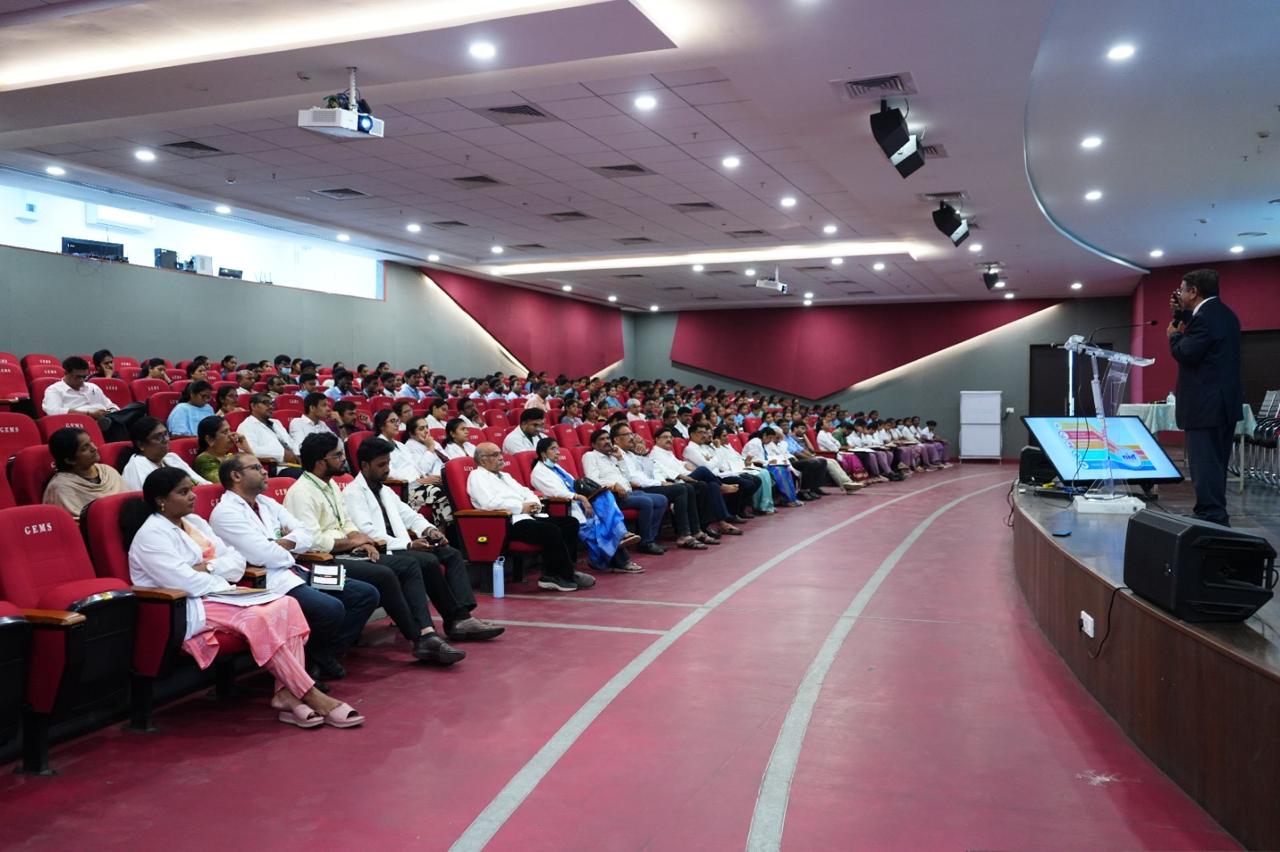
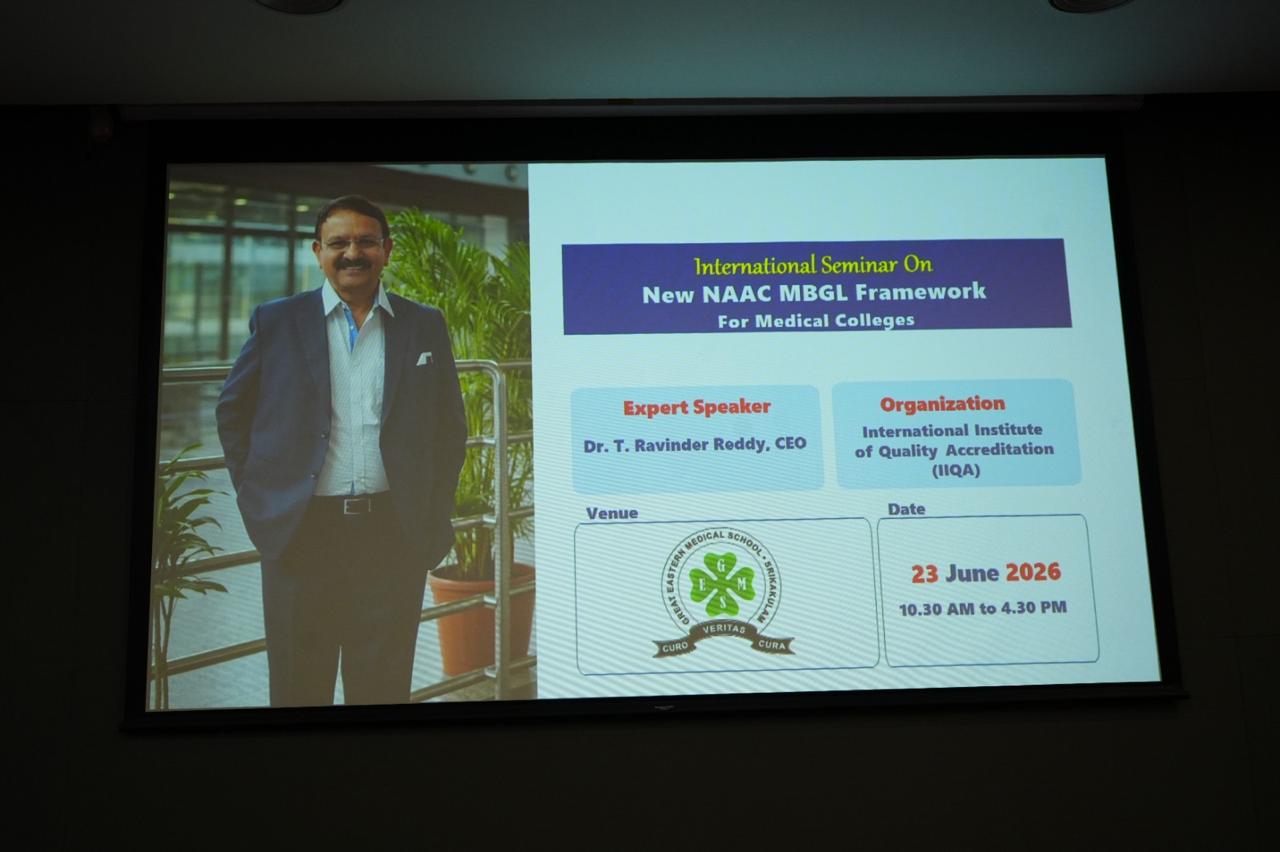
To support these objectives, Great Eastern Medical School, Srikakulam, in collaboration with the International Institute of Quality Accreditation & Ranking (IIQA), organized an International Expert Seminar on NIRF Ranking & New NAAC MBGL Framework on 23 June 2026.
The seminar was designed to help academic leaders, faculty members, administrators, and quality assurance teams understand the latest developments in the National Institutional Ranking Framework (NIRF) and the New NAAC Maturity-Based Graded Levels (MBGL) Accreditation Framework, enabling institutions to align their practices with evolving quality benchmarks.

About Great Eastern Medical School, Srikakulam
Great Eastern Medical School (GEMS), Srikakulam, is a reputed medical institution committed to excellence in medical education, healthcare services, research, and community engagement.
The institution focuses on developing competent healthcare professionals while maintaining high academic standards and quality-driven educational practices. Through initiatives such as this international seminar, Great Eastern Medical School demonstrates its commitment to continuous improvement, accreditation readiness, and institutional excellence.
The collaboration with IIQA reflects the institution's proactive approach toward understanding national quality frameworks and strengthening its academic and administrative systems.
About Great Eastern Medical School, Srikakulam
The seminar brought together academic administrators, deans, faculty members, and quality professionals to discuss emerging trends in higher education quality assessment.
The primary focus areas included:
- National Institutional Ranking Framework (NIRF)
- New NAAC Maturity-Based Graded Levels (MBGL) Framework
- Institutional Quality Enhancement
- Accreditation Readiness
- Governance and Leadership
- Data-Driven Quality Systems
- Continuous Improvement Strategies
The seminar provided participants with practical insights into the changing accreditation and ranking landscape and the strategies institutions can adopt to improve performance.
Understanding NIRF Rankings
What is NIRF?
The National Institutional Ranking Framework (NIRF) is India's official ranking system for higher education institutions. It evaluates universities, colleges, and professional institutions based on a set of objective performance indicators.
Key NIRF Parameters
Teaching, Learning and Resources (TLR)
Measures faculty quality, infrastructure, student strength, and financial resources.
Research and Professional Practice (RP)
Evaluates publications, citations, patents, and research funding.
Graduation Outcomes (GO)
Assesses student success through graduation rates, placements, and higher education progression.
Outreach and Inclusivity (OI)
Measures diversity, accessibility, and inclusiveness.
Perception (PR)
Reflects institutional reputation among academics, employers, and stakeholders.
Why NIRF Rankings Matter
Strong NIRF performance helps institutions improve visibility, attract students, enhance credibility, and benchmark themselves against leading institutions in India.
Understanding the New NAAC MBGL Framework
What is the NAAC MBGL Framework?
The Maturity-Based Graded Levels (MBGL) Framework introduced by NAAC represents a significant evolution in accreditation methodology. The framework focuses on assessing institutions based on their maturity, quality culture, governance effectiveness, innovation, and continuous improvement practices.
Unlike traditional accreditation approaches, the MBGL framework encourages institutions to move progressively through various levels of quality maturity.
Key Focus Areas of MBGL
- Institutional Governance
- Academic Excellence
- Research and Innovation
- Student-Centric Practices
- Community Engagement
- Digital Transformation
- Quality Assurance Systems
- Outcome-Based Education
Benefits of the MBGL Framework
The framework promotes:
- Continuous institutional development
- Strong quality culture
- Strategic planning and governance
- Data-driven decision-making
- Sustainable academic excellence
Keynote Speaker: Dr. T. Ravinder Reddy
The seminar was led by Dr. T. Ravinder Reddy, CEO of the International Institute of Quality Accreditation & Ranking (IIQA) and a distinguished expert in accreditation, quality assurance, and institutional development.
Professional Credentials
- CEO, International Institute of Quality Accreditation & Ranking (IIQA)
- L.L.B. (Osmania University)
- L.L.M. – Constitutional Law (Osmania University)
- Ph.D. (Kakatiya University)
- Alumni of IIM Ahmedabad
- President of India Medal Awardee
- Establishment and Accreditation Expert
With extensive experience supporting universities, medical colleges, engineering institutions, and higher education organizations, Dr. Ravinder Reddy has guided numerous institutions in accreditation, ranking enhancement, governance reforms, and quality assurance initiatives.
Key Insights Shared During the Seminar
NIRF Data Management and Reporting
Participants learned about the importance of accurate data collection, validation, and reporting for ranking success.
Institutional Quality Enhancement
The session emphasized creating systems that support long-term quality improvement and measurable outcomes.
Preparing for the New MBGL Framework
Detailed guidance was provided on aligning institutional processes with the expectations of the new accreditation model.
Research and Innovation Excellence
Strategies for increasing research productivity, publications, patents, and innovation activities were discussed.
Leadership and Governance
The seminar highlighted the critical role of leadership in driving accreditation success and institutional transformation.
Building a Quality Culture
Participants gained insights into fostering organization-wide commitment to quality, accountability, and continuous improvement.
Benefits for Medical Colleges and Higher Education Institutions
Institutions that effectively implement NIRF and NAAC quality frameworks can achieve significant advantages, including:
Improved Academic Standards
Quality-focused systems enhance teaching and learning outcomes.
Stronger Accreditation Performance
Institutions become better prepared for accreditation assessments and reviews.
Enhanced Institutional Reputation
Recognition through rankings and accreditation strengthens stakeholder confidence.
Better Research Outcomes
Quality systems support research productivity and innovation.
Sustainable Growth
Continuous improvement practices contribute to long-term institutional success.
IIQA's Role in Accreditation and Ranking Excellence
The International Institute of Quality Accreditation & Ranking (IIQA) actively supports educational institutions through accreditation consultancy, ranking guidance, quality audits, capacity-building programs, and institutional development initiatives.
IIQA provides expertise in:
- NAAC Accreditation Consultancy
- NIRF Ranking Guidance
- MBGL Framework Implementation
- Quality Assurance Systems
- Institutional Audits
- Documentation Support
- Strategic Planning
- Capacity Building and Training
Through expert-led seminars and consultancy services, IIQA helps institutions strengthen quality systems and achieve academic excellence.
Advancing Institutional Excellence Through Quality Frameworks
As accreditation and ranking systems continue to evolve, educational institutions must adopt structured approaches to quality management, governance, and performance improvement.
The International Expert Seminar at Great Eastern Medical School provided participants with valuable knowledge and practical strategies to navigate the changing landscape of higher education quality assurance.
By embracing frameworks such as NIRF and the new NAAC MBGL model, institutions can strengthen their academic performance, improve stakeholder confidence, and advance toward sustainable excellence.
Conclusion
The International Expert Seminar on NIRF Ranking & New NAAC MBGL Framework, organized by Great Eastern Medical School, Srikakulam, in collaboration with IIQA, served as an important platform for understanding the future of accreditation and quality assurance in higher education.
Led by Dr. T. Ravinder Reddy, the seminar provided valuable insights into ranking methodologies, accreditation reforms, governance practices, and quality enhancement strategies. Such initiatives play a crucial role in helping institutions prepare for evolving quality frameworks and achieve long-term academic excellence.
FAQs
What was the objective of the seminar at Great Eastern Medical School?
The seminar aimed to educate academic leaders and faculty about NIRF rankings and the new NAAC MBGL accreditation framework.
What is the NAAC MBGL Framework?
The Maturity-Based Graded Levels (MBGL) Framework is NAAC's updated accreditation model focused on institutional quality maturity and continuous improvement.
Why are NIRF rankings important?
NIRF rankings help institutions benchmark performance, improve visibility, and strengthen academic reputation.
Who conducted the seminar?
The seminar was organized by Great Eastern Medical School in collaboration with the International Institute of Quality Accreditation & Ranking (IIQA).
Who was the keynote speaker?
Dr. T. Ravinder Reddy, CEO of IIQA and an expert in accreditation and institutional quality assurance.
How can institutions benefit from the MBGL framework?
The framework supports governance improvement, quality enhancement, research development, and sustainable institutional growth.