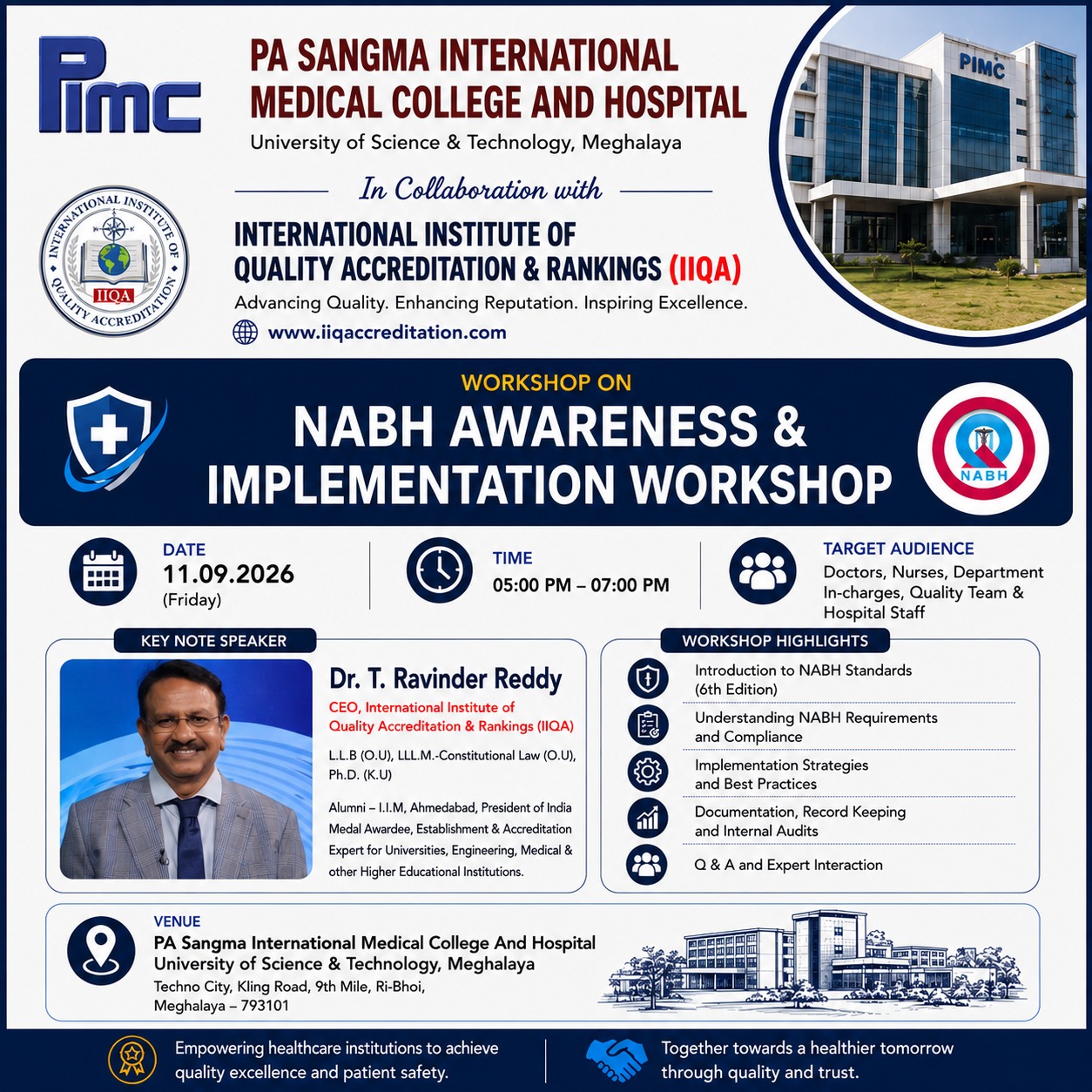
Hospitals today are expected to provide not only quality treatment but also safe, standardized, and patient-friendly healthcare services. This is why NABH accreditation for hospitals has become increasingly important in India. Patients are now more aware of healthcare quality and often prefer hospitals that follow strict safety, hygiene, and treatment standards.
NABH accreditation helps hospitals improve patient care, staff training, documentation, safety protocols, infrastructure, and overall hospital management systems. Hospitals with NABH hospital accreditation are often considered more trustworthy, organized, and reliable.
What is NABH Accreditation?
NABH refers to the National Accreditation Board for Hospitals & Healthcare Providers, an organization responsible for setting quality and safety standards for hospitals and healthcare institutions in India. It is a constituent board of the Quality Council of India and is responsible for setting healthcare quality standards for hospitals and medical institutions.
NABH accreditation means that a hospital has met specific standards related to patient safety, infection control, medical records, staff competency, emergency preparedness, and hospital operations.
When a hospital receives NABH hospital accreditation, it gives confidence to patients that the hospital follows nationally recognized healthcare standards. This improves patient trust and strengthens the reputation of the hospital.
Many people search for NABH accredited hospitals means or NABH certified hospital means because they want to know whether a hospital is safe and reliable. A NABH accredited hospital generally has better systems, trained staff, proper hygiene, and improved patient care.
Why is NABH Accreditation Important for Hospitals?
The importance of NABH accreditation has increased significantly because patients are more concerned about treatment quality and hospital safety.
Hospitals with NABH accreditation for hospitals often gain a competitive advantage because patients trust them more. Insurance companies and healthcare networks also prefer NABH accredited hospitals.
Some of the major benefits of NABH hospital accreditation include:
- Better patient safety and treatment quality
- Improved infection control systems
- Better medication management
- Proper emergency care standards
- Higher patient trust and satisfaction
- Better staff training and accountability
- Easier insurance empanelment
- Improved compliance with healthcare regulations
- Better hospital reputation and brand value
NABH accreditation also helps hospitals reduce errors, improve efficiency, and maintain high-quality standards in every department.
NABH Accreditation Requirements for Hospitals
Hospitals need to meet several NABH accreditation requirements before applying. These requirements ensure that the hospital can provide safe and quality healthcare services.
Some of the major NABH accreditation requirements include:
- Valid hospital registration certificate
- Trade license and local authority approvals
- Fire safety certificate and Fire NOC
- Biomedical waste management agreement
- Pollution control board approvals
- Qualified doctors, nurses, and support staff
- Standard Operating Procedures (SOPs)
- Infection control policies
- Emergency care and disaster management plans
- Patient rights and education policies
- Medical record management systems
- Equipment maintenance records
- Staff training and competency records
Hospitals must also follow the guidebook of NABH accreditation standards for hospitals 6th edition, which provides detailed guidelines for every hospital department.
NABH Standards for Hospitals
NABH hospital accreditation is based on several important standards that cover all major areas of hospital management and patient care.
The key NABH standards include:
- Access Assessment and Continuity of Care (AAC)
- Care of Patients (COP)
- Management of Medication (MOM)
- Patient Rights and Education (PRE)
- Infection Prevention and Control (IPC)
- Patient Safety and Quality Improvement (PSQ)
- Responsibility of Management (ROM)
- Facility Management and Safety (FMS)
- Human Resource Management (HRM)
- Information Management System (IMS)
These standards help hospitals improve treatment quality, reduce medical errors, maintain proper records, and provide safe healthcare services.
Documents Required for NABH Accreditation
Documentation is one of the most important parts of NABH accreditation for hospitals. Hospitals need to prepare and maintain several records before applying.
Important NABH required documents include:
- Hospital registration certificate
- Trade license
- GST registration certificate
- Fire NOC
- Pollution control certificate
- Biomedical waste disposal agreement
- Building safety certificate
- Staff appointment letters
- Qualification certificates of doctors and nurses
- Infection control manual
- Patient consent forms
- Emergency response plan
- Equipment maintenance records
- SOPs and quality policies
Hospitals that do not maintain proper documentation may face delays during the NABH assessment process.
NABH Accreditation Process Step by Step
The NABH accreditation process usually involves multiple stages.
- Submission of Application
- Desktop Review
- Pre-assessment (optional)
- Final Assessment
- Review of Assessment Report by NABH Secretariat
- Recommendation by Accreditation Committee
- Approval for Accreditation
- Issue of Accreditation Certificate (Valid for 4 Years)
- Surveillance Assessment (21–24 Months)
- Renewal Assessment*
In case of any deviation observed at any stage of the process (Submission of Application to Renewal Assessment), feedback will be provided to the Healthcare Organisation. The organisation is required to take necessary corrective actions and submit compliance within the stipulated time for further review and continuation of the accreditation process.
Note: For Renewal Assessment, the accredited hospital has to apply 6 months prior to expiry of validity of accreditation.
How IIQA Can Help Hospitals with NABH Accreditation
Hospitals often find the NABH accreditation process difficult because it requires documentation, staff training, SOP creation, internal audits, and continuous quality improvement.
International Institute of Quality Accreditation (IIQA) provides consultancy and implementation support for hospitals planning to obtain NABH accreditation.
IIQA supports hospitals through:
- Gap analysis and readiness assessment
- NABH documentation preparation
- SOP creation and policy drafting
- Staff awareness and training programs
- Internal audit support
- Mock assessments before final audit
- Guidance during NABH assessment visits
- Corrective action planning
Hospitals that work with experienced NABH consultants can often reduce delays, improve compliance, and complete the accreditation process more efficiently.
Benefits of NABH Accreditation for Hospitals
Hospitals that receive NABH accreditation for hospitals can enjoy several long-term benefits.
Some of the major benefits include:
- Better hospital reputation
- Increased patient trust
- Improved patient satisfaction
- Easier insurance and TPA empanelment
- Better staff accountability
- Improved operational efficiency
- Reduced medical errors
- Better legal and regulatory compliance
- Improved infection control systems
NABH accreditation can also help hospitals attract more patients because many people specifically search for NABH accredited hospitals before selecting a healthcare provider.
Conclusion
NABH accreditation for hospitals plays an important role in improving patient safety, healthcare quality, documentation, operational efficiency, and overall hospital management. Hospitals that fulfill NABH accreditation requirements are better equipped to provide standardized healthcare services, improve treatment outcomes, and build stronger trust among patients.
From infection control and emergency preparedness to staff training and medical record management, NABH hospital accreditation helps hospitals maintain high standards across every department. Although the accreditation process can be time-consuming, the long-term benefits in terms of reputation, patient satisfaction, and compliance make it a worthwhile investment.
Hospitals planning to obtain NABH accreditation can simplify the process by taking support from experienced consultancy providers like IIQA Accreditation. IIQA Accreditation helps hospitals with gap analysis, documentation, SOP preparation, staff training, internal audits, mock assessments, and final NABH audit support. With expert guidance from IIQA Accreditation, hospitals can complete the NABH accreditation process more smoothly, efficiently, and successfully.