How Can Indian Universities Achieve Global Excellence and Stand Among the World's Best?
A Special Editorial
The world is undergoing an unprecedented transformation driven by the Fourth Industrial Revolution and rapidly advancing toward an Artificial Intelligence-powered knowledge economy. In this new era, the true strength of a nation is no longer measured solely by its natural resources or industrial capacity but by its ability to create knowledge, foster innovation, develop cutting-edge technologies, and produce highly skilled human capital.
Universities have become the engines of national development. They are no longer institutions that merely award degrees; they are centres of research, innovation, entrepreneurship, technological advancement, and policy leadership. The world's leading universities have significantly influenced economic growth, scientific discovery, healthcare, digital transformation, and sustainable development.
Institutions such as Harvard University, the Massachusetts Institute of Technology (MIT), Stanford University, the University of Oxford, the University of Cambridge, ETH Zurich, the National University of Singapore, and Tsinghua University have become global benchmarks not only because of academic excellence but because of their unwavering commitment to research, innovation, interdisciplinary education, and international collaboration.
India now stands at a defining moment in its educational history.
India's Greatest Opportunity
India possesses one of the world's youngest populations and one of the largest higher education ecosystems. Every year, millions of graduates enter the workforce from universities and colleges across engineering, medicine, management, science, humanities, and social sciences.
Indian professionals occupy leadership positions in some of the world's most influential organisations. Global technology companies such as Google, Microsoft, Adobe, IBM, NVIDIA, and Mastercard are led by individuals of Indian origin. This reflects the intellectual capability and global competitiveness of Indian talent.
Yet an important question remains:
If Indian professionals are leading the world's largest organisations, why are only a limited number of Indian universities represented among the world's top-ranked institutions?
The answer lies not in a lack of talent but in the need for stronger research ecosystems, sustained quality assurance, institutional autonomy, global engagement, and a long-term vision for academic excellence.
NEP-2020: A Transformational Framework
The National Education Policy (NEP) 2020 represents the most comprehensive reform of India's higher education system in decades. It provides a strategic roadmap for transforming Indian institutions into globally competitive universities.
The policy emphasises:
- Multidisciplinary education
- Student-centred learning
- Research and innovation
- Skill development
- Academic flexibility
- Digital education
- Internationalisation
- Industry-academia collaboration
- Entrepreneurship
- Holistic development
- Institutional autonomy
- Quality enhancement
However, policies alone cannot transform institutions. Their success depends on effective implementation, visionary leadership, and a commitment to continuous improvement.
Quality is a Culture, Not a Certificate
Many institutions still perceive accreditation as an administrative exercise or a one-time achievement. In reality, accreditation should be viewed as the beginning of a continuous journey toward excellence.
Quality in higher education means:
- Continuous academic improvement
- Research excellence
- Outcome-based education
- Student satisfaction
- Faculty development
- Transparent governance
- Data-driven decision-making
- Industry relevance
- Social impact
- Global competitiveness
The world's leading universities did not achieve excellence through rankings alone. They built institutional cultures where quality became part of everyday academic practice.
Why Global Rankings Matter
International ranking systems such as the QS World University Rankings, Times Higher Education (THE) World University Rankings, Academic Ranking of World Universities (ARWU), and U.S. News Best Global Universities Rankings have become important indicators of institutional performance.
These rankings evaluate universities on multiple dimensions, including:
- Academic reputation
- Employer reputation
- Faculty-to-student ratio
- Research output
- Research impact and citations
- International faculty
- International students
- Industry collaboration
- Sustainability
- Global engagement
High-performing universities benefit significantly from improved rankings.
They attract:
- International students
- World-class faculty
- Global research collaborations
- International funding opportunities
- Foreign investments
- Industrial partnerships
- Enhanced academic reputation
- Better graduate employability
Thus, global rankings should not be viewed merely as competitive indicators but as benchmarks for institutional transformation.
How Can Indian Universities Rise in Global Rankings?
If India aspires to place more universities among the world's Top 100 and Top 200 institutions, a comprehensive strategy is essential.
-
Research Excellence Must Become the Highest Priority
Globally recognised universities are research-intensive institutions.
Indian universities must significantly increase:
- High-quality publications
- Highly cited research
- International collaborative projects
- Patents
- Technology transfer
- Research commercialisation
- Innovation ecosystems
The focus should shift from the quantity of publications to their quality, originality, and societal impact.
-
Faculty Excellence Determines Institutional Excellence
Faculty members are the intellectual foundation of every university.
Institutions should invest in:
- Faculty development programmes
- International academic collaborations
- Research grants
- Postdoctoral opportunities
- Leadership training
- Global conference participation
- Industry engagement
- Continuous professional development
Universities that nurture outstanding faculty invariably produce outstanding graduates.
-
Internationalisation is No Longer Optional
Global universities thrive because they actively engage with the international academic community.
Indian universities should:
- Recruit international faculty
- Attract foreign students
- Develop joint and dual degree programmes
- Promote student and faculty exchange initiatives
- Participate in global research networks
- Establish international research centres
Internationalisation enhances academic quality while strengthening institutional reputation.
-
Strong Industry-Academia Collaboration
One of the defining characteristics of globally recognised universities is their close partnership with industry.
Indian institutions should strengthen:
- Industry-sponsored laboratories
- Live industrial projects
- Consultancy services
- Technology transfer offices
- Innovation hubs
- Internship programmes
- Collaborative research
- Skill development initiatives
Such partnerships improve both research quality and graduate employability.
-
Graduate Employability Must Improve
The success of a university is reflected not only in academic performance but also in the success of its graduates.
Students must graduate with competencies that match the evolving global economy.
Beyond technical knowledge, institutions should develop:
- Critical thinking
- Problem-solving
- Leadership
- Communication skills
- Digital literacy
- Artificial Intelligence literacy
- Creativity
- Ethical decision-making
- Entrepreneurial mindset
- Adaptability
Future graduates will be expected not merely to seek employment but to create new opportunities through innovation and entrepreneurship.
Building a Sustainable Quality Culture
The world's leading universities share one common characteristic:
Quality is embedded in their institutional culture.
They continuously monitor academic performance, evaluate outcomes, encourage research, support innovation, collect stakeholder feedback, invest in faculty development, and improve governance through evidence-based decision-making.
India already possesses one of the world's largest higher education systems. The next national objective should be to build one of the world's highest-quality higher education ecosystems.
Achieving this vision requires collective commitment from governments, regulatory bodies, university leadership, faculty members, researchers, industry, alumni, and students.
The journey toward global excellence begins not with rankings, but with an unwavering commitment to quality.
Only then can Indian universities emerge among the world's finest institutions and become the driving force behind Viksit Bharat 2047.
Quality Revolution in Indian Higher Education
Part – 2
Research, Innovation, Artificial Intelligence, Entrepreneurship, and the Future of Indian Universities
A nation's progress is measured not merely by the number of universities it possesses, but by the knowledge those institutions generate, the innovations they create, and the societal impact they produce. In the twenty-first century, research has become the defining factor that distinguishes globally renowned universities from ordinary institutions.
The world's highest-ranked universities are recognised because they continuously generate new knowledge, publish influential research, develop breakthrough technologies, secure patents, establish start-ups, and solve real-world challenges. Their campuses function as innovation ecosystems where education, research, industry, and entrepreneurship coexist.
For India to emerge as a global knowledge leader, its universities must transition from being primarily teaching institutions to becoming research-intensive and innovation-driven centres of excellence.
Research Universities: The Foundation of Global Excellence
Globally acclaimed universities invest heavily in research infrastructure, interdisciplinary collaboration, advanced laboratories, and innovation ecosystems.
A research university encourages faculty members and students to:
- Pursue original scientific investigations
- Publish in high-impact international journals
- Develop patents and intellectual property
- Collaborate with global institutions
- Solve industrial and societal challenges
- Secure competitive research grants
- Translate discoveries into commercial technologies
Such institutions contribute directly to national economic growth, technological advancement, and international competitiveness.
India has already taken important steps through initiatives such as the National Education Policy (NEP) 2020, the National Research Foundation (NRF), and various research funding programmes. However, sustained investment and institutional commitment are essential to realise their full potential.
Creating a Research Culture
Research should not remain confined to doctoral programmes or specialised laboratories.
Every university should cultivate a vibrant research culture by encouraging:
- Undergraduate research projects
- Interdisciplinary collaborations
- Faculty-student research partnerships
- International research networks
- Industry-sponsored research
- Innovation competitions
- Research incubation programmes
Students who engage in research develop analytical thinking, creativity, and problem-solving abilities that prepare them for leadership in academia, industry, and public policy.
Innovation: From Knowledge to Impact
Innovation transforms research into practical solutions that improve lives and strengthen economies.
Universities should become centres where ideas evolve into technologies, products, services, and enterprises.
To foster innovation, institutions should establish:
- Innovation Centres
- Technology Business Incubators
- Start-up Cells
- Intellectual Property (IP) Facilitation Centres
- Entrepreneurship Development Centres
- Centres of Excellence
- Prototype Development Laboratories
These ecosystems encourage students and faculty to convert research outcomes into commercially viable solutions that address local and global challenges.
Start-up Ecosystems in Universities
The world's leading universities have played a significant role in nurturing globally successful start-ups.
Institutions such as Stanford University and the Massachusetts Institute of Technology (MIT) have demonstrated how universities can become engines of entrepreneurship and technological innovation.
Indian universities must cultivate similar ecosystems by encouraging students to become job creators rather than job seekers.
An effective university start-up ecosystem should include:
- Innovation funding
- Seed capital support
- Industry mentorship
- Business incubation
- Intellectual property guidance
- Investor networking
- Market validation
- Entrepreneurial training
When universities promote entrepreneurship, they contribute not only to employment generation but also to national economic development.
Artificial Intelligence: Transforming Higher Education
Artificial Intelligence (AI) is reshaping every sector of society, including education, healthcare, manufacturing, agriculture, finance, governance, and scientific research.
Universities must prepare graduates who understand and responsibly utilise AI technologies.
Academic institutions should integrate AI across disciplines by introducing programmes in:
- Artificial Intelligence
- Machine Learning
- Deep Learning
- Data Science
- Robotics
- Computer Vision
- Natural Language Processing
- Intelligent Automation
AI should also enhance institutional operations through:
- Adaptive learning systems
- Smart classrooms
- Digital assessments
- Learning analytics
- Predictive student support
- Research analytics
- Academic planning
The future university will be data-driven, technology-enabled, and learner-centred.
Emerging Technologies: Preparing for the Next Industrial Revolution
Future-ready universities must invest in emerging technologies that will shape the global economy.
Priority areas include:
- Quantum Computing
- Semiconductor Technology
- Cybersecurity
- Internet of Things (IoT)
- Blockchain
- Advanced Materials
- Renewable Energy
- Smart Manufacturing
- Biotechnology
- Nanotechnology
Developing expertise in these domains will enable Indian universities to contribute to national strategic priorities while enhancing global competitiveness.
Space Science and Advanced Research
India has earned global recognition through the remarkable achievements of the Indian Space Research Organisation (ISRO).
Universities should build upon this success by expanding research in:
- Space Technology
- Satellite Systems
- Aerospace Engineering
- Remote Sensing
- Geospatial Sciences
- Planetary Exploration
- Climate and Earth Observation
Collaborative research between universities, government agencies, and industry can accelerate scientific progress and inspire the next generation of researchers.
Healthcare Innovation and Medical Research
Medical education is entering an era where technology and healthcare are increasingly integrated.
Universities and medical institutions should strengthen research in:
- Artificial Intelligence in Healthcare
- Precision Medicine
- Genomics
- Digital Pathology
- Robotic Surgery
- Telemedicine
- Pharmaceutical Innovation
- Biomedical Engineering
- Public Health Analytics
Research-driven healthcare systems improve patient outcomes while strengthening national health security.
Industry–Academia Collaboration
One of the major strengths of globally recognised universities is their close relationship with industry.
Academic institutions should collaborate with industries in areas such as:
- Joint research projects
- Consultancy services
- Curriculum development
- Industrial internships
- Live problem-solving projects
- Technology commercialisation
- Faculty immersion programmes
- Executive education
Such collaborations ensure that academic programmes remain relevant to rapidly evolving industry needs.
Preparing Students for the Future Workforce
The jobs of tomorrow will require capabilities that extend beyond disciplinary knowledge.
Universities must nurture graduates who possess:
- Critical thinking
- Creativity
- Analytical reasoning
- Leadership
- Communication
- Digital competence
- Ethical responsibility
- Global awareness
- Adaptability
- Entrepreneurial mindset
Graduates equipped with these competencies will be prepared not only to succeed professionally but also to contribute meaningfully to society.
The Role of Quality Institutions in Institutional Transformation
Achieving excellence requires continuous learning, benchmarking, and expert guidance.
Across India, higher education institutions increasingly participate in quality enhancement initiatives, faculty development programmes, academic audits, and leadership workshops to strengthen institutional capacity and align with national and international quality frameworks.
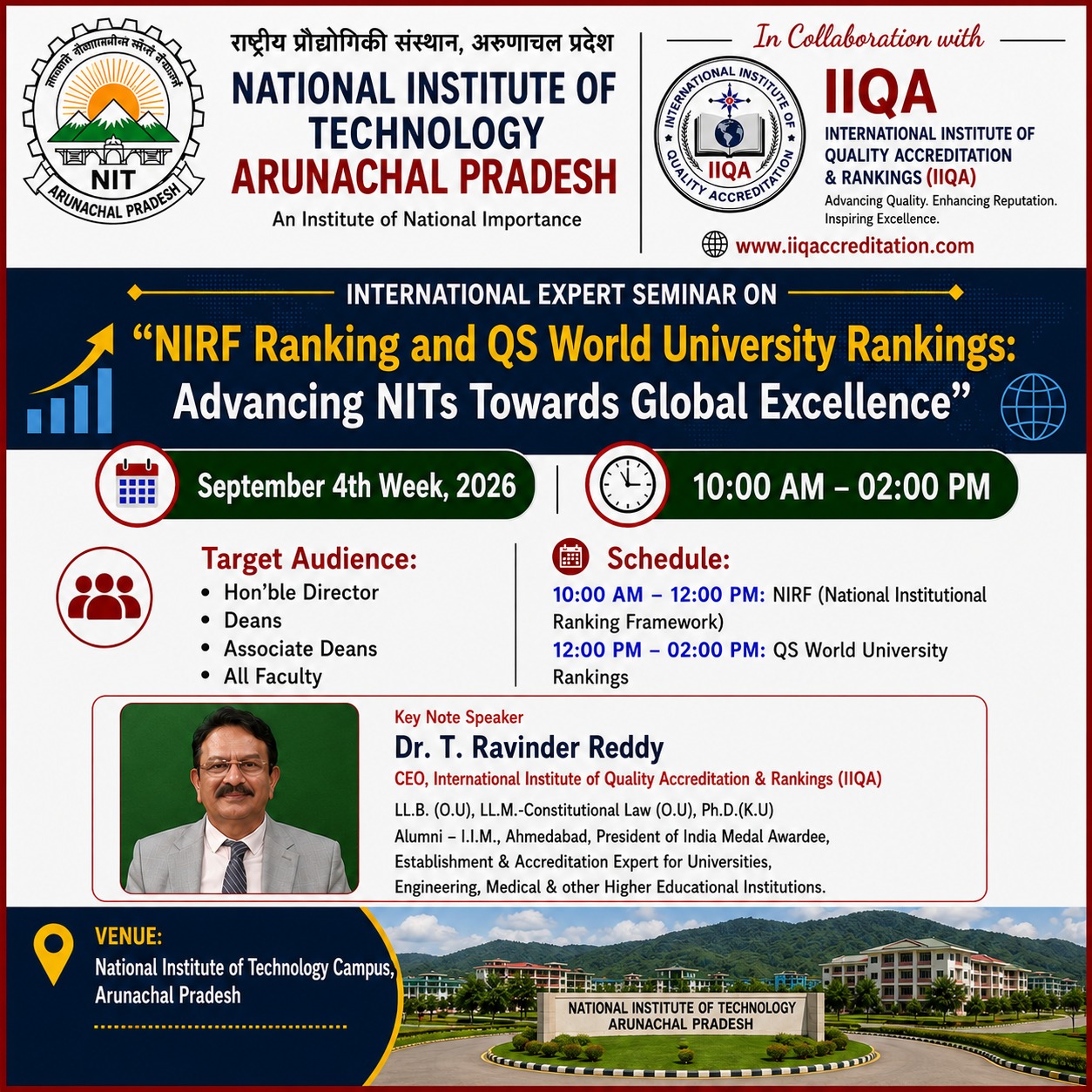
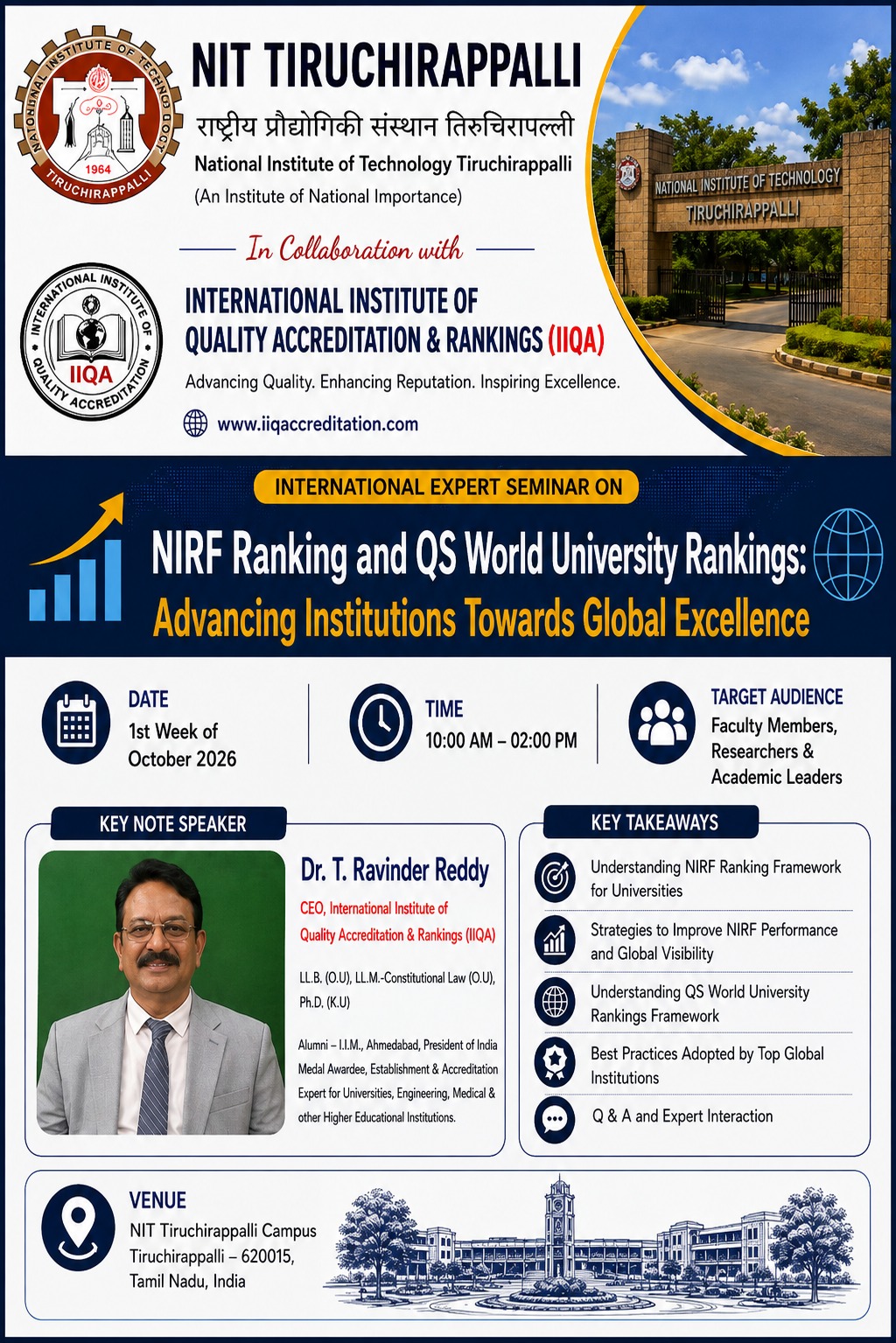
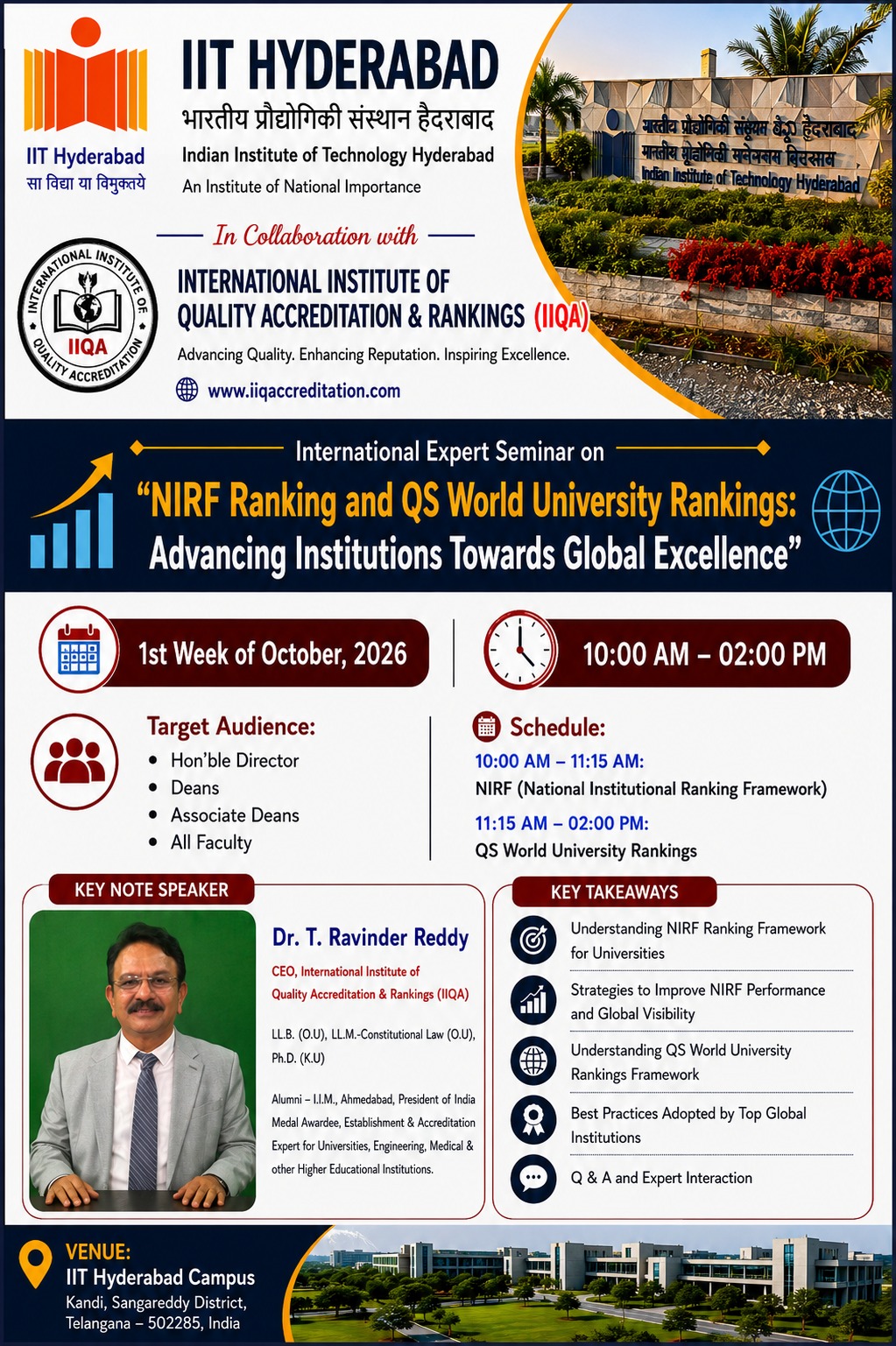
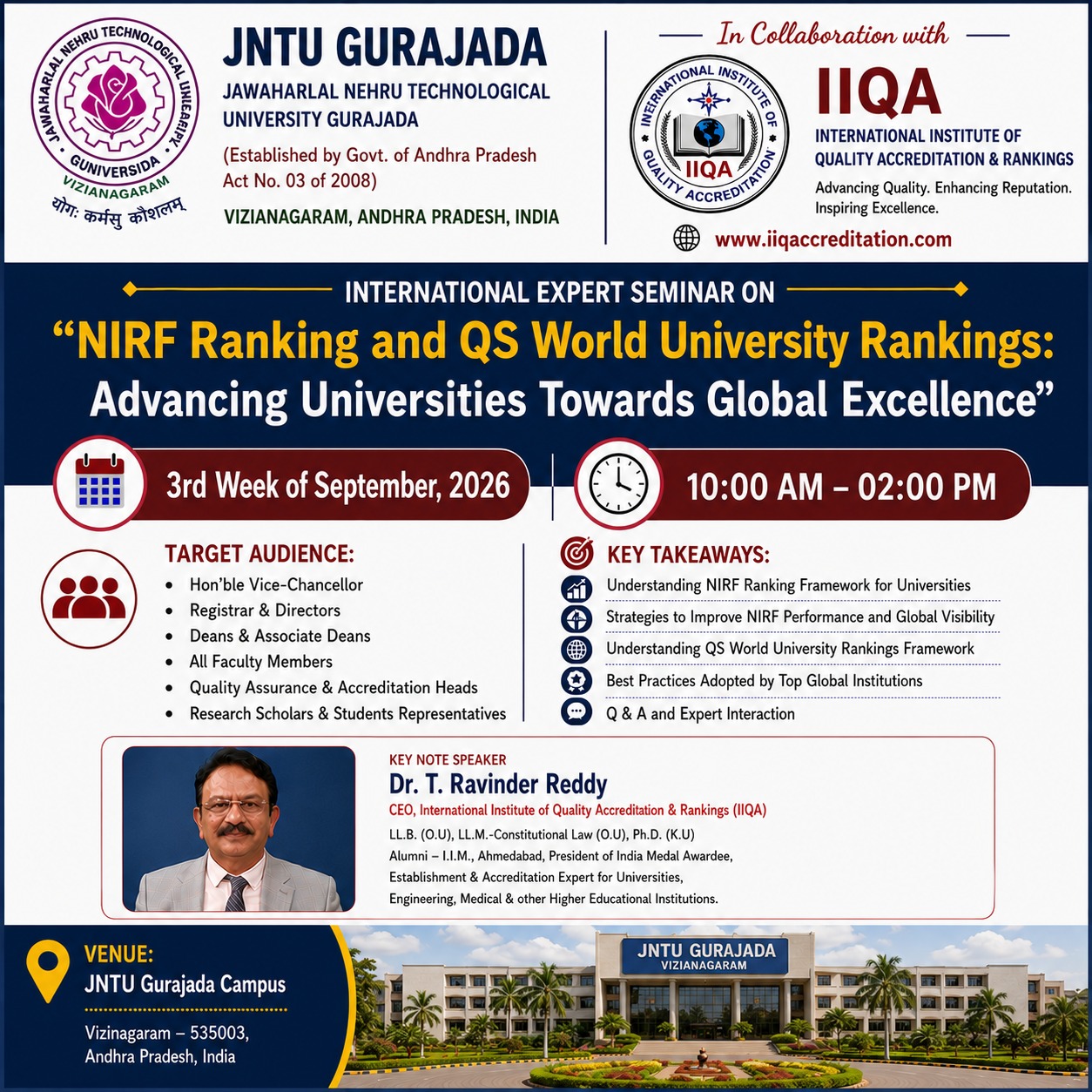
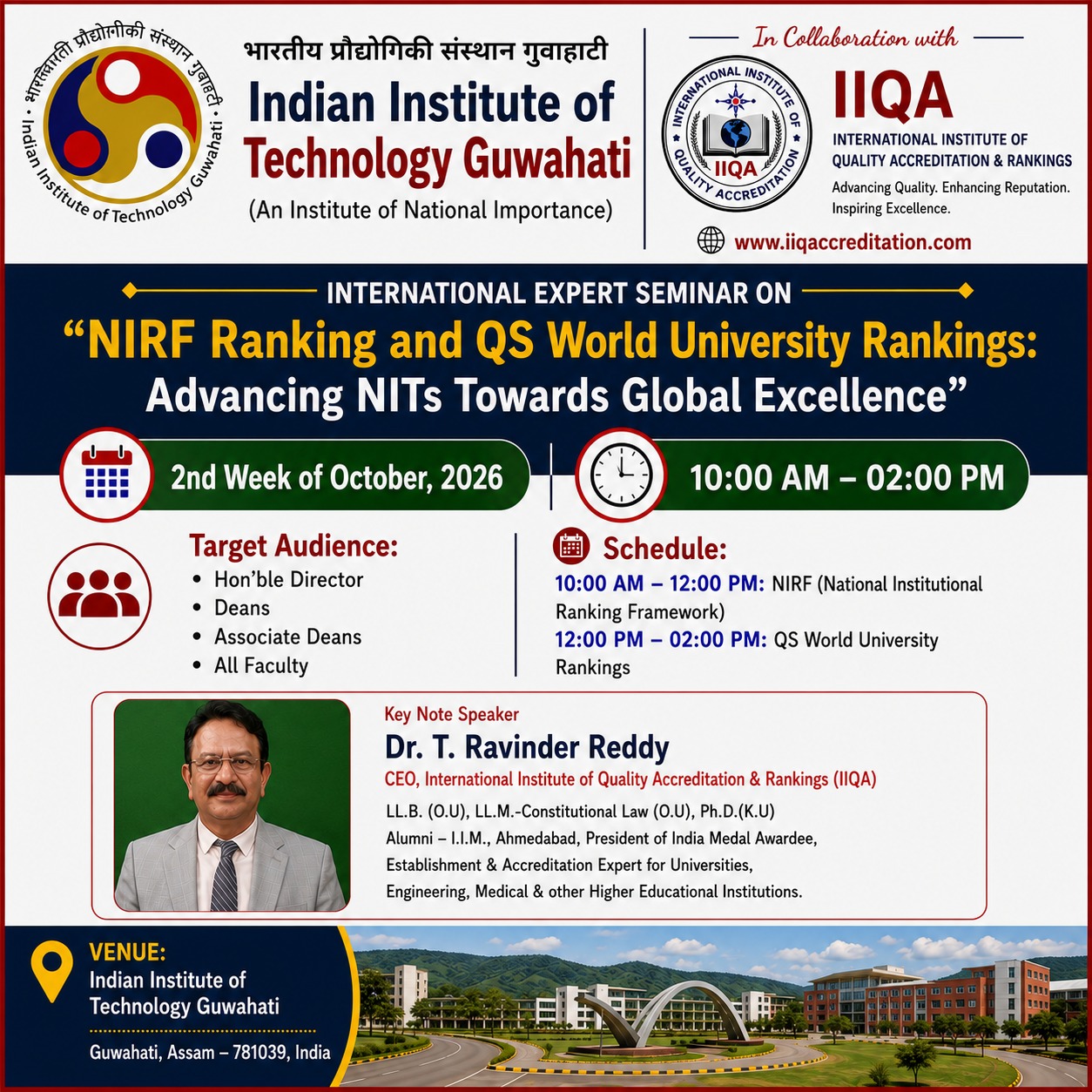
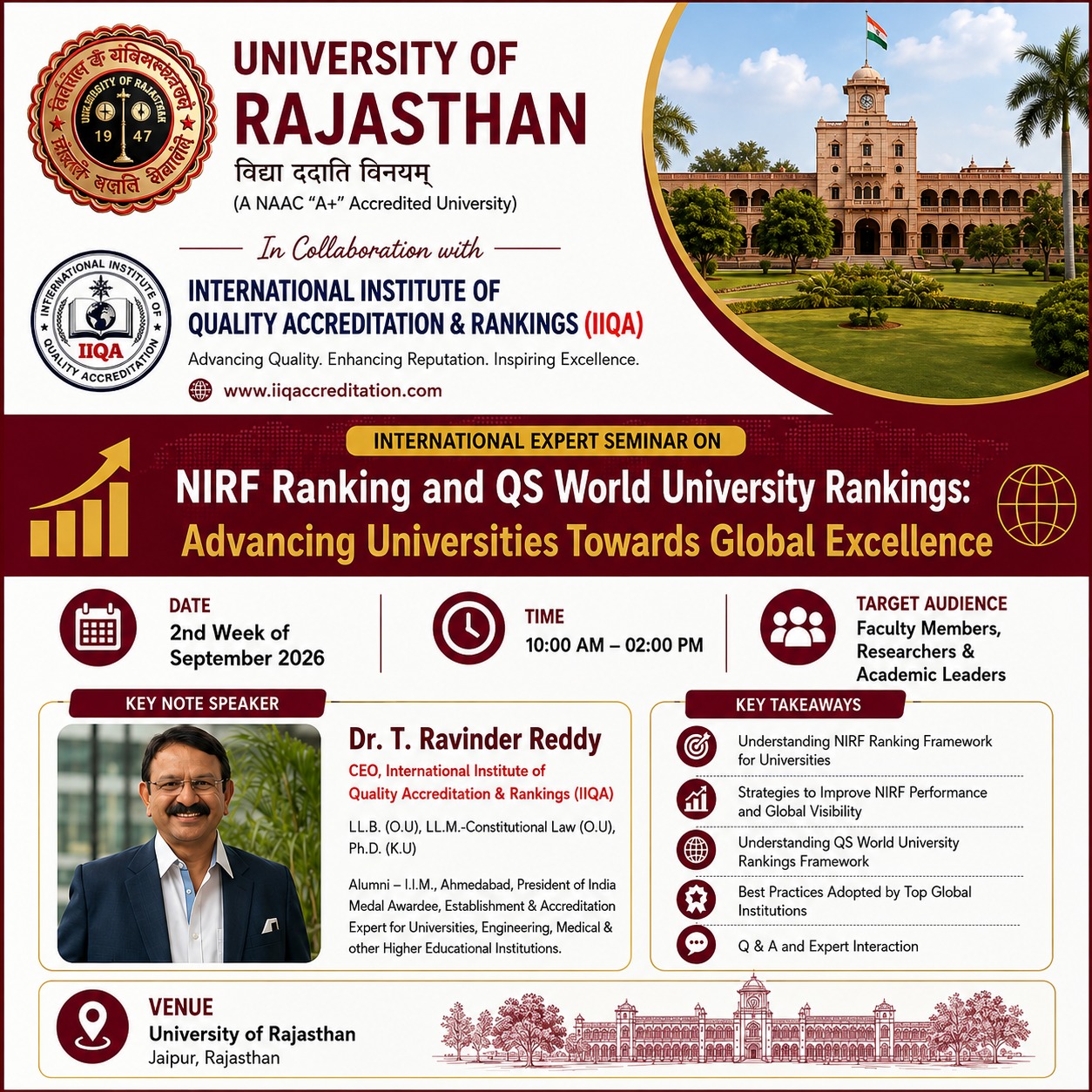
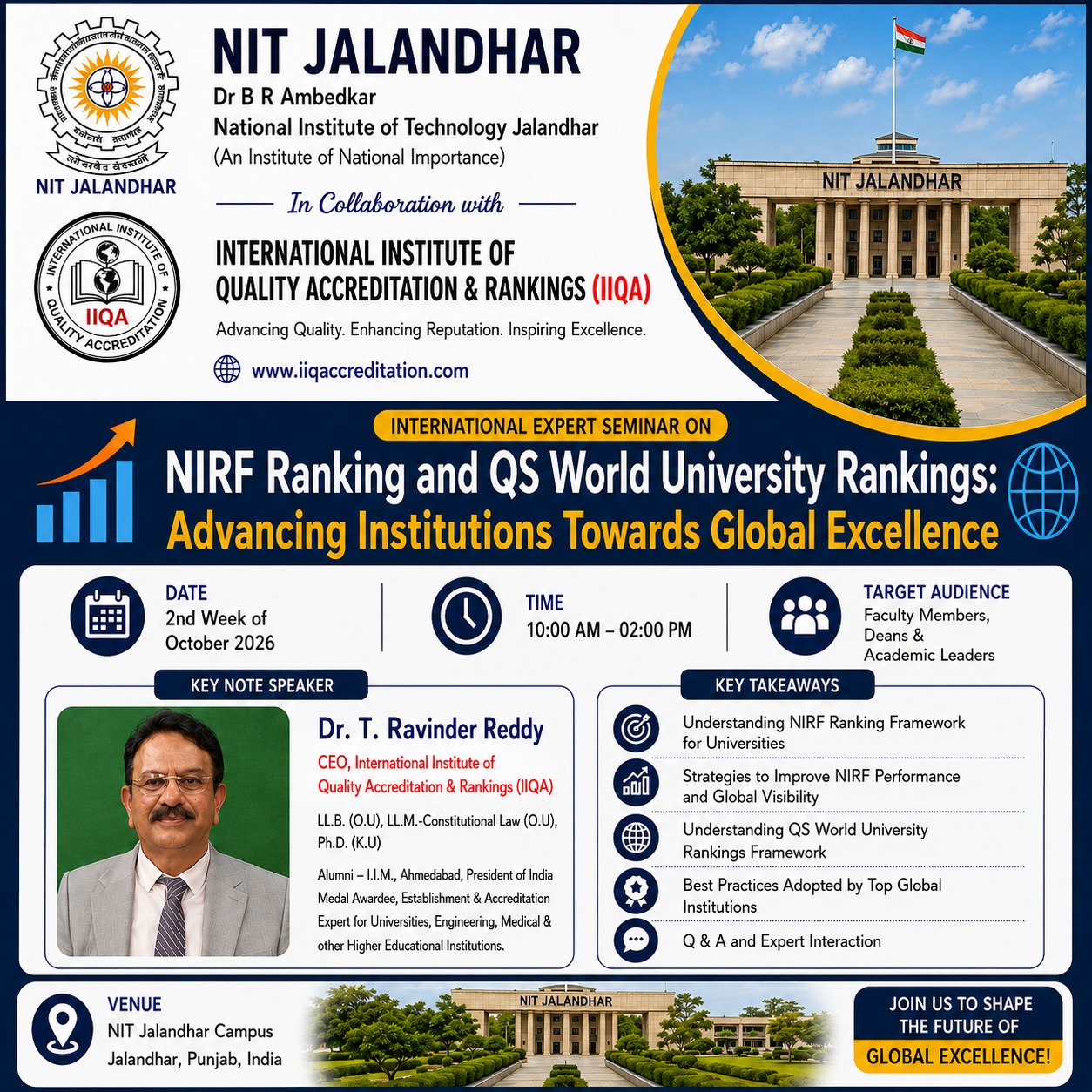
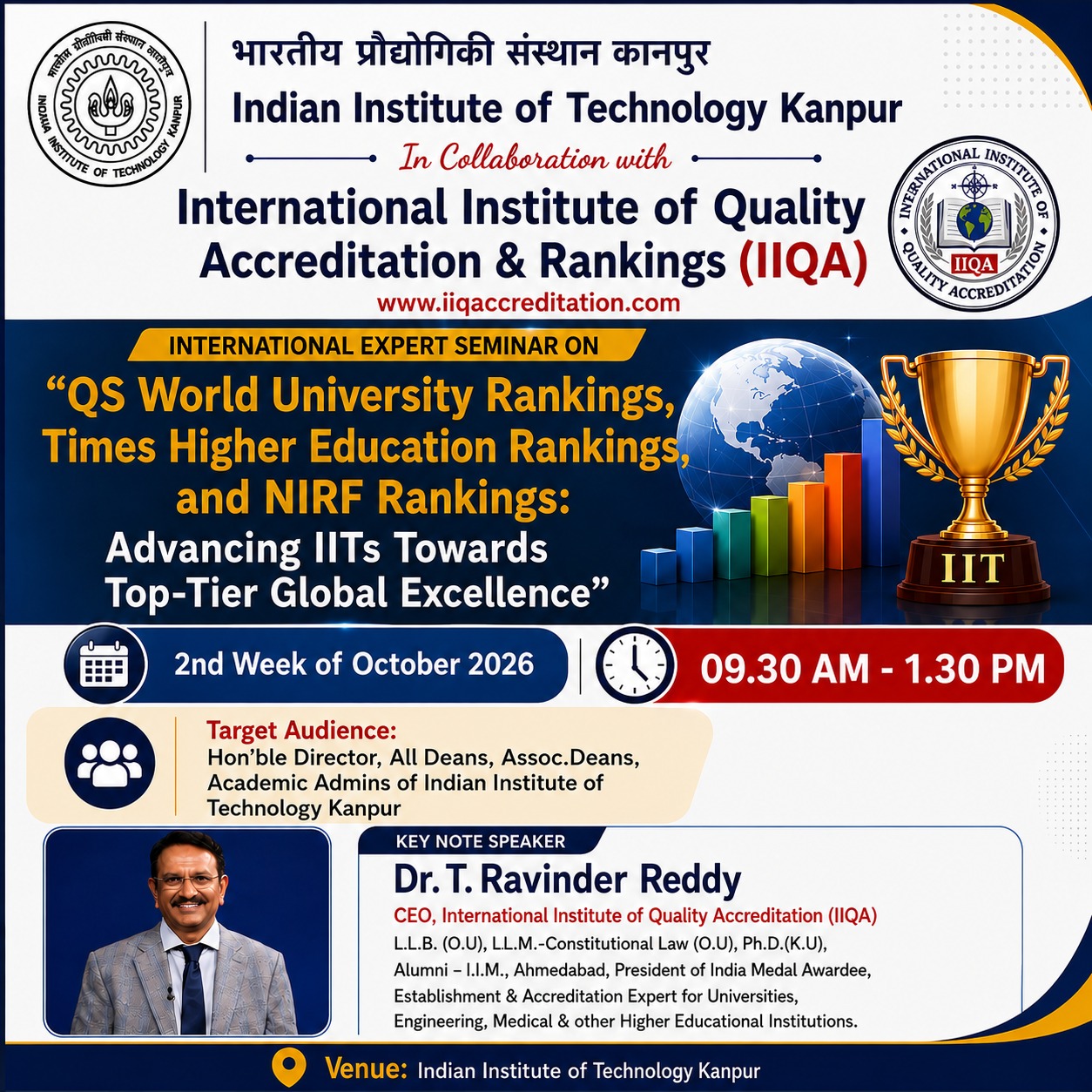
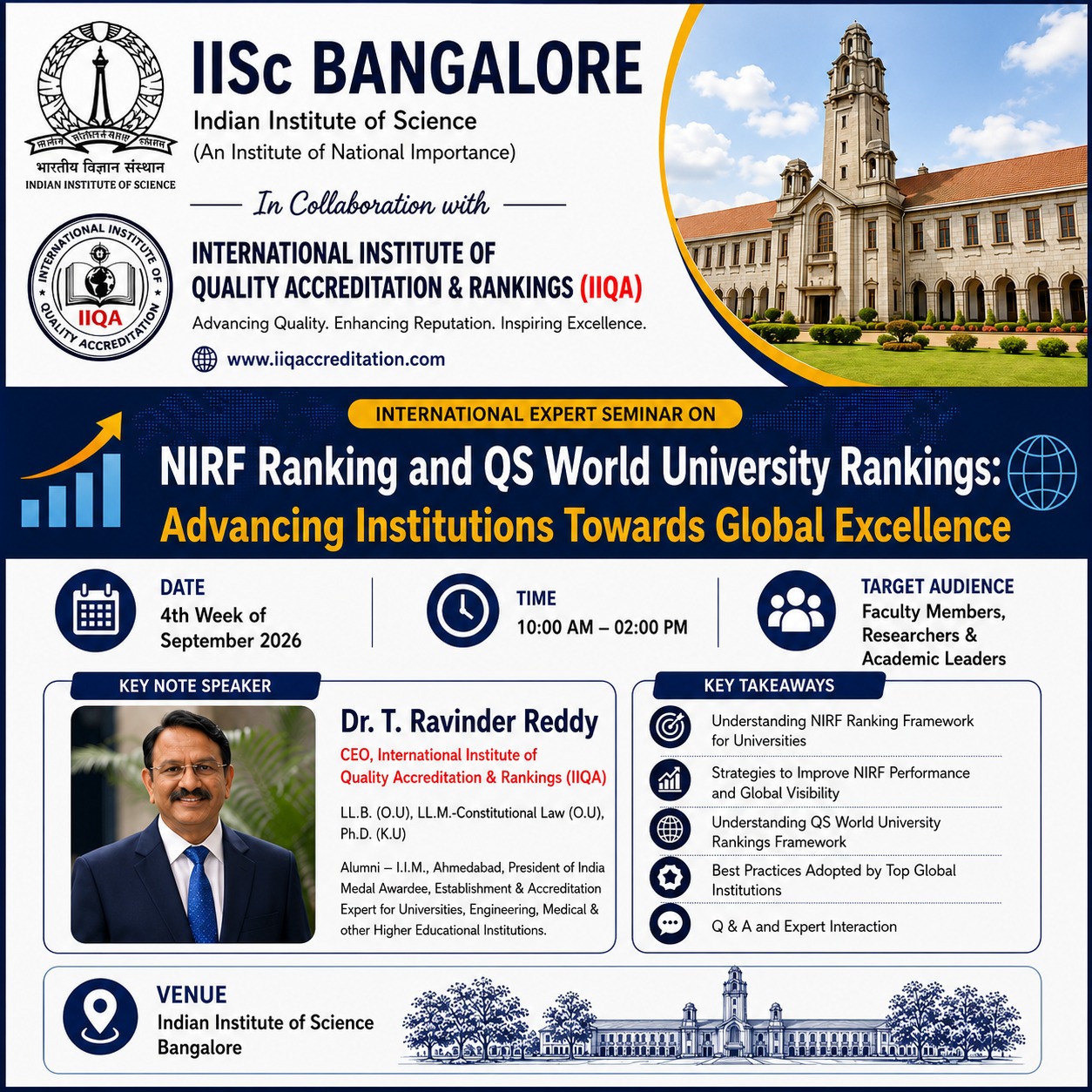
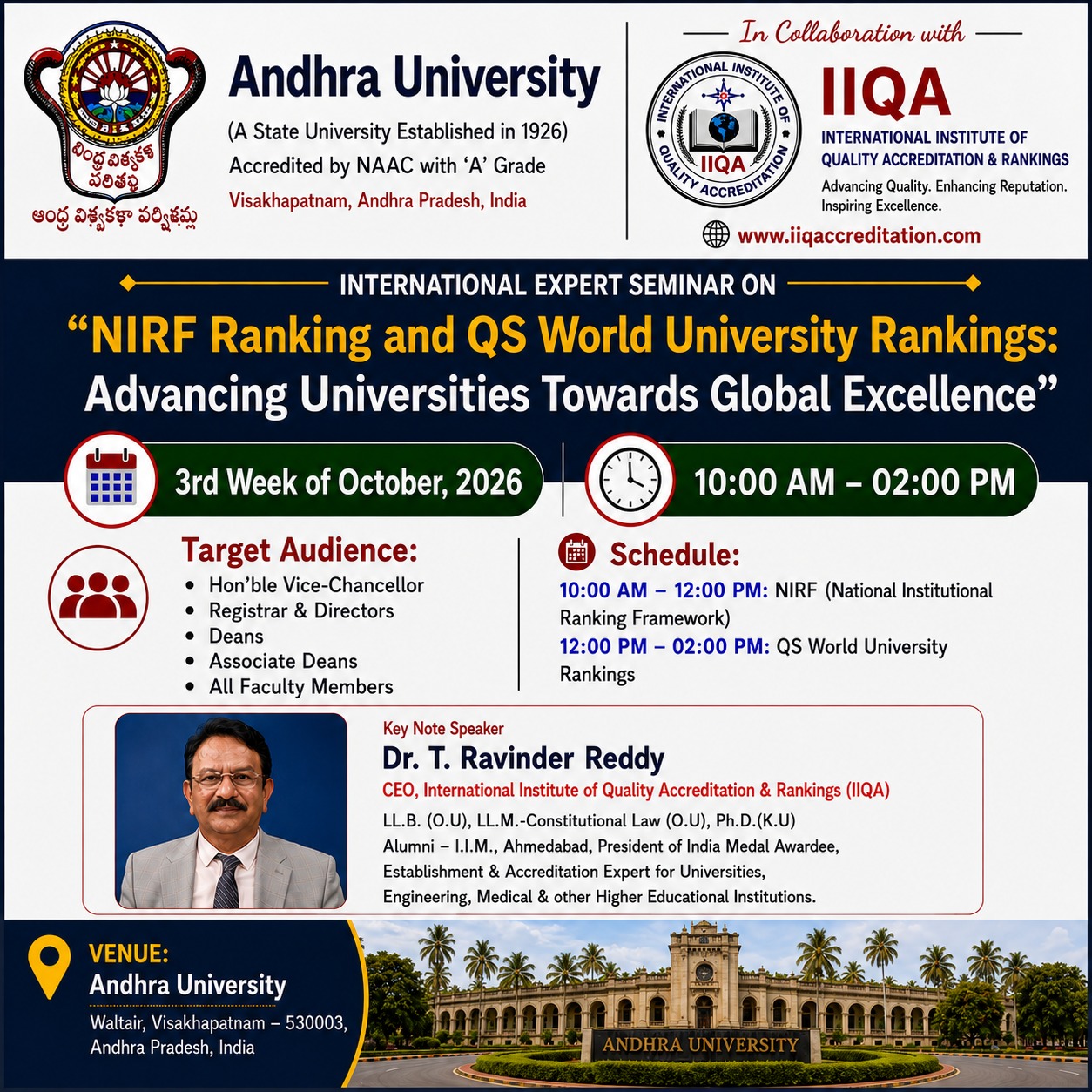
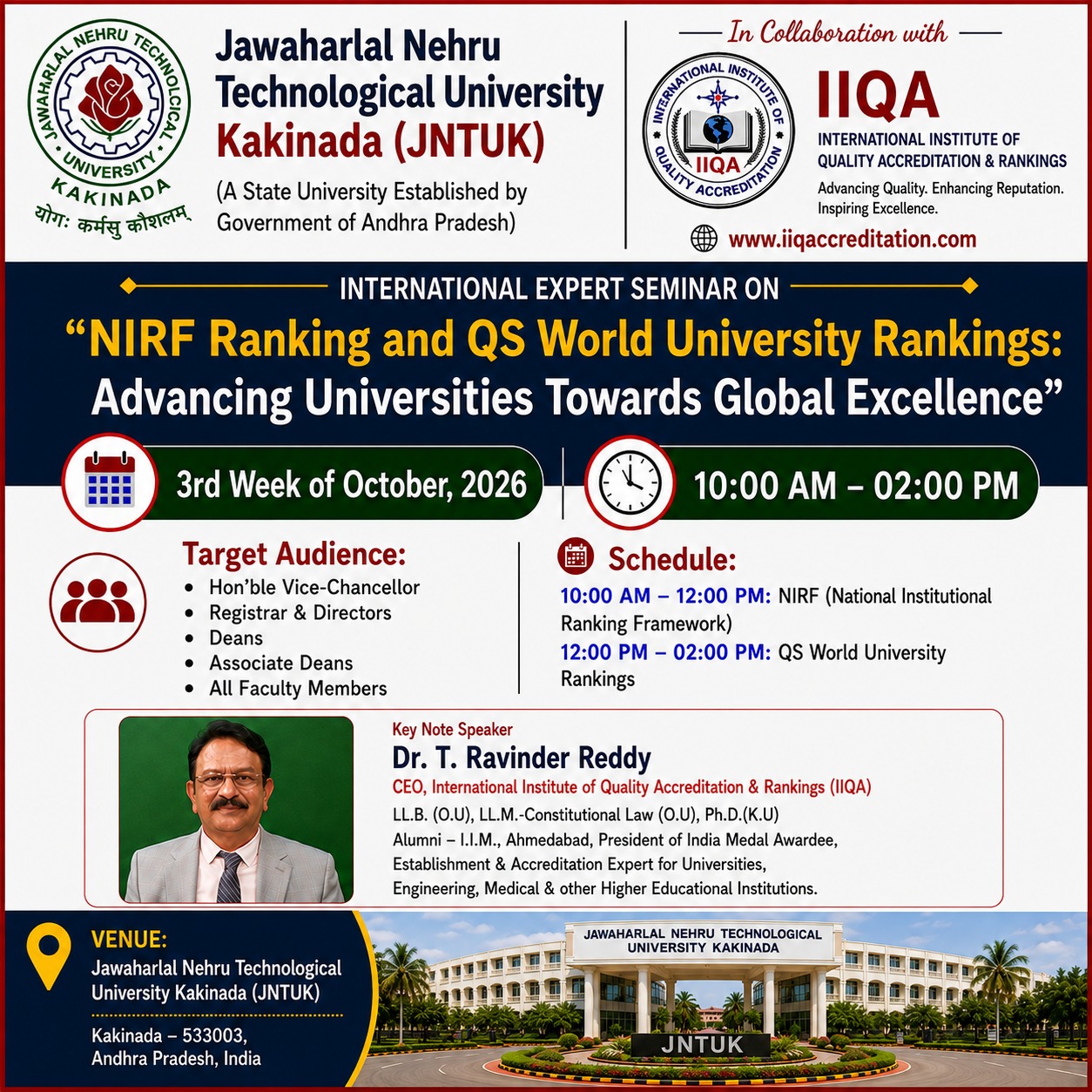
In this context, the International Institute of Quality Accreditation & Rankings (IIQA) has been working with universities, IITs, NITs, engineering institutions, and medical colleges across various states by organising expert lectures, Faculty Development Programmes (FDPs), IQAC workshops, Outcome-Based Education (OBE) training, and capacity-building initiatives related to NEP 2020, NAAC, NBA, NIRF, QS World University Rankings, Times Higher Education (THE) Rankings, NABH, and NABL. These knowledge-sharing initiatives support institutions in strengthening quality systems, academic governance, and global preparedness.
Towards a Research-Driven India
India possesses the intellectual capital, demographic advantage, and institutional diversity needed to become one of the world's foremost knowledge economies.
The next phase of higher education reform must therefore focus on creating universities that generate ideas, advance scientific discovery, promote innovation, nurture entrepreneurship, and contribute solutions to national and global challenges.
Research should become a way of thinking, innovation should become an institutional culture, and entrepreneurship should become an integral part of academic life.
Only then will Indian universities evolve into globally respected centres of excellence capable of driving scientific progress, economic development, and sustainable societal transformation.
The universities that invest in research today will shape the world of tomorrow.
Quality Revolution in Indian Higher Education
Part – 3
The Global Roadmap for Indian Universities: From National Excellence to Global Leadership
India today possesses one of the largest and most diverse higher education systems in the world. With over a thousand universities and tens of thousands of colleges serving millions of students, the country has an extraordinary demographic advantage. However, the true measure of a nation's higher education system lies not in its size, but in the quality of education, research output, innovation, global influence, and societal impact it creates.
As India aspires to become a developed nation under the vision of Viksit Bharat 2047, higher education must become the cornerstone of national transformation. Universities must evolve from institutions that primarily disseminate knowledge into globally respected centres that create knowledge, drive innovation, influence public policy, and contribute solutions to humanity's greatest challenges.
A Long-Term Vision for Indian Universities
The world's most successful universities have achieved excellence through long-term strategic planning rather than short-term initiatives.
Every Indian university should develop a clear institutional roadmap with measurable goals for the next two decades.
Such a vision should include:
- Becoming a globally recognised research university.
- Achieving positions in the Top 500, Top 200, and eventually the Top 100 of international rankings.
- Establishing internationally recognised Centres of Excellence.
- Expanding global research collaborations.
- Increasing international student enrolment.
- Recruiting distinguished faculty from around the world.
- Building world-class research infrastructure.
- Strengthening partnerships with industry and government.
Universities that consistently pursue long-term institutional goals are more likely to sustain excellence across generations.
Governance: The Foundation of Institutional Excellence
Academic excellence flourishes when supported by transparent, accountable, and data-driven governance.
Modern universities should embrace governance systems based on:
- Digital transformation
- Enterprise Resource Planning (ERP)
- Academic analytics
- Institutional dashboards
- Performance indicators
- Evidence-based decision-making
- Financial transparency
- Continuous institutional review
Leadership must shift from reactive administration to strategic institutional development.
Effective governance enhances efficiency, improves accountability, and creates an environment where faculty and students can focus on academic excellence.
Internal Quality Assurance: The Heart of Institutional Development
Quality assurance should never be viewed merely as preparation for accreditation visits.
Instead, every university should establish a culture of continuous quality enhancement through a proactive and empowered Internal Quality Assurance Cell (IQAC).
An effective IQAC should continuously monitor:
- Academic quality
- Research performance
- Curriculum relevance
- Faculty development
- Student learning outcomes
- Administrative efficiency
- Stakeholder satisfaction
- Institutional best practices
- Sustainability initiatives
- Innovation and entrepreneurship
Quality assurance should become an ongoing institutional philosophy rather than a periodic compliance exercise.
Accreditation and Rankings: A Unified Journey Towards Excellence
Many institutions mistakenly treat accreditation and rankings as independent objectives.
In reality, they represent different dimensions of the same pursuit—academic excellence.
Each framework contributes uniquely:
- NAAC evaluates institutional quality and governance.
- NBA focuses on programme-level academic standards.
- NIRF measures national institutional performance.
- QS World University Rankings assess global academic reputation and international competitiveness.
- Times Higher Education (THE) Rankings evaluate research excellence, teaching quality, international outlook, and societal impact.
- ABET, AACSB, AMBA, and ACBSP provide internationally recognised programme accreditation.
- NABH and NABL strengthen quality systems in healthcare and laboratory education.
Rather than pursuing these frameworks independently, institutions should integrate their requirements into a comprehensive institutional quality strategy.
The University of the Future
Higher education is undergoing one of the most significant transformations in its history.
Future universities will increasingly incorporate:
- Artificial Intelligence-enabled teaching
- Virtual and remote laboratories
- Smart classrooms
- Digital libraries
- Immersive learning technologies
- Hybrid education models
- Global virtual classrooms
- Personalised learning pathways
- Micro-credentials and lifelong learning
- Data-driven student support systems
Technology will not replace teachers; rather, it will empower educators to provide more personalised, engaging, and effective learning experiences.
Universities that successfully integrate technology while preserving academic integrity will lead the future of higher education.
India as a Global Knowledge Leader
India's educational heritage stretches back thousands of years.
Ancient institutions such as Takshashila, Nalanda, and Vikramashila attracted scholars from across Asia and established India as one of the world's earliest centres of higher learning.
The opportunity before modern India is to revive this legacy in a contemporary context.
Indian universities should aspire not only to educate students but also to contribute globally through:
- Breakthrough scientific discoveries
- High-impact research publications
- Technological innovations
- Intellectual property and patents
- Healthcare advancements
- Climate solutions
- Sustainable development
- Social innovation
- Public policy research
- Entrepreneurship
A nation that generates knowledge shapes the future of the world.
Leadership Determines Institutional Success
Buildings, laboratories, and infrastructure alone cannot create world-class universities.
Institutional success depends upon visionary leadership.
Vice-Chancellors, Directors, Registrars, Deans, Principals, Governing Boards, and faculty leaders collectively determine whether an institution merely functions or truly excels.
Effective academic leadership should be characterised by:
- Strategic vision
- Academic integrity
- Research orientation
- Global outlook
- Innovation
- Accountability
- Collaborative decision-making
- Student-centric governance
Leadership that inspires excellence creates institutions capable of sustaining excellence.
The Value of Expert Guidance and Capacity Building
Institutional transformation is accelerated when universities actively learn from national and international best practices.
Regular academic audits, faculty development programmes, leadership workshops, benchmarking exercises, and quality enhancement initiatives help institutions strengthen governance, improve teaching and research, and align with global quality standards.
In this regard, the International Institute of Quality Accreditation & Rankings (IIQA) has contributed to institutional capacity building by collaborating with universities, IITs, NITs, engineering institutions, and medical colleges across India. Through expert lectures, Faculty Development Programmes (FDPs), IQAC workshops, Outcome-Based Education (OBE) training, leadership development programmes, and awareness initiatives on NEP 2020, NAAC, NBA, NIRF, QS World University Rankings, Times Higher Education (THE) Rankings, NABH, and NABL, IIQA supports institutions in strengthening quality systems and preparing for national and global benchmarks.
Viksit Bharat 2047: Education as the Driving Force
India's aspiration to become a developed nation by 2047 depends fundamentally on the strength of its higher education system.
A developed nation requires:
- Globally competitive universities
- Research-intensive institutions
- Highly skilled graduates
- Innovative entrepreneurs
- Ethical leadership
- Sustainable technologies
- International collaboration
- Inclusive and equitable education
Every university should become a centre of research.
Every college should nurture innovation.
Every faculty member should become a mentor for future leaders.
Every student should graduate as a problem solver capable of contributing to society and the global economy.
Conclusion
Building globally recognised universities is not a short-term project; it is a continuous journey requiring vision, commitment, collaboration, and perseverance.
India possesses the intellectual talent, demographic strength, cultural heritage, and institutional capacity necessary to emerge as one of the world's leading knowledge societies.
The challenge before us is not whether India can achieve global excellence—it is how rapidly and how effectively we can transform our institutions to realise that potential.
The future belongs to universities that embrace quality as a culture, research as a responsibility, innovation as a mission, and global collaboration as a strategic priority.
When Indian universities consistently uphold these principles, they will not merely improve their rankings—they will shape scientific progress, economic growth, social development, and global thought leadership.
The journey towards becoming a "Vishwaguru" begins with world-class universities. By investing in quality, research, innovation, and international excellence today, India can build a higher education system that inspires the world and powers the nation's journey towards Viksit Bharat 2047.