Introduction
Today, students and parents look at more than just courses and fees when choosing a university. They also want to know about the university's teaching quality, research, reputation, international opportunities, and career support.
This is why global university rankings can be useful.
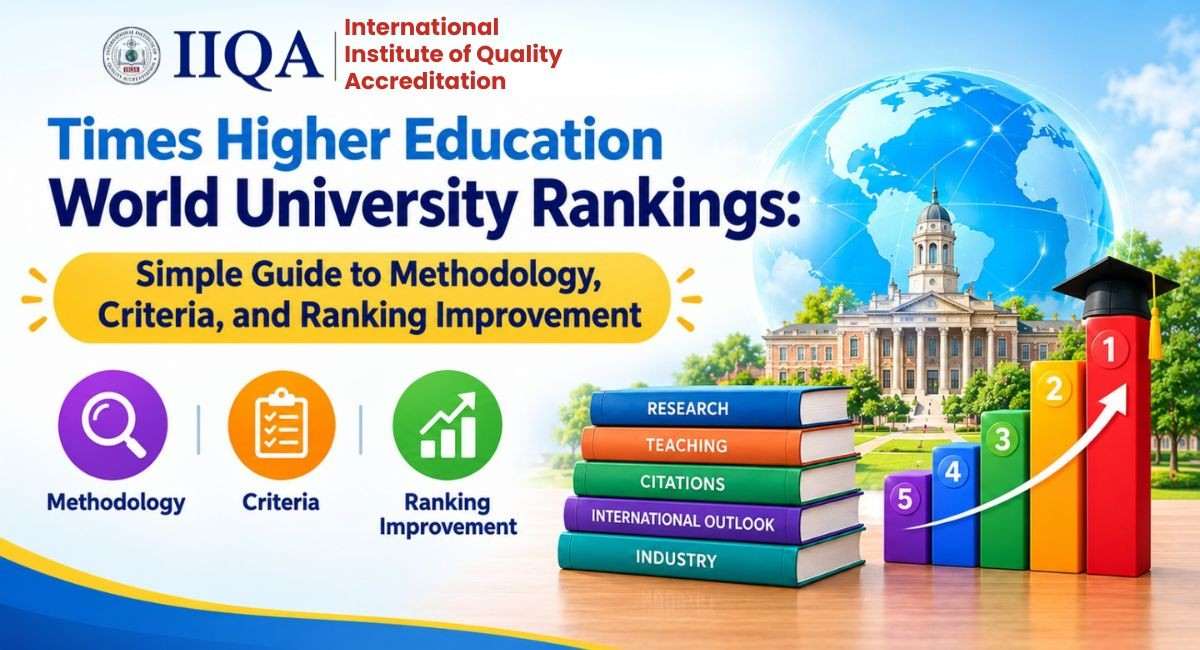
The Times Higher Education World University Rankings is one of the well-known global ranking systems for research-focused universities. It compares universities based on areas such as teaching, research, international connections, and industry partnerships.
But how does THE rank universities? What are the THE Ranking Criteria? What affects a university's ranking? And how can a university improve its THE ranking?
Let's understand the THE World University Rankings methodology in simple language.
What Are the Times Higher Education World University Rankings?
The Times Higher Education World University Rankings, also known as THE Rankings, is a global ranking system that compares universities based on their overall performance.
THE does not look at only one area. It considers several important areas, including:
- Teaching quality and learning environment
- Research environment
- Research quality and impact
- International outlook
- Industry connections and innovation
For the THE Rankings 2026, Times Higher Education uses 18 performance indicators across five major areas. These indicators are combined to give each eligible university an overall score.
This helps universities understand how their performance compares with universities around the world.
How Are Times Higher Education Rankings Calculated?
One common question is: How are Times Higher Education rankings calculated?
THE collects different types of university information and uses its THE Ranking Methodology to calculate the final ranking.
The data comes from universities, academic reputation surveys, and research and citation information. Research data is based on publications and citations listed in Elsevier's Scopus database.
The 18 indicators are grouped into five main areas:
- Teaching – 29.5%
- Research Environment – 29%
- Research Quality – 30%
- International Outlook – 7.5%
- Industry – 4%
Together, these five areas are used to calculate the overall ranking score.
THE World University Rankings Methodology Explained
Understanding the THE Ranking Methodology can help universities understand where they are performing well and where they need to improve.
Let's look at each area in simple words.
1. Teaching – 29.5%
Teaching is an important part of the THE Ranking Parameters.
THE looks at the quality of the learning environment and the resources available to students.
The Teaching category includes factors such as:
- Teaching reputation
- Student-to-staff ratio
- Doctorate-to-bachelor's ratio
- Number of doctorates awarded compared with academic staff
- Institutional income
Teaching reputation is based partly on THE's Academic Reputation Survey, which collects opinions from academics around the world.
How Can Universities Improve Teaching?
Universities can focus on:
- Improving teaching quality
- Maintaining a good student-to-faculty ratio
- Providing training and development for teachers
- Increasing doctoral-level academic activity
- Improving academic facilities
- Creating a better learning environment for students
Good teaching can help a university build a stronger academic reputation over time.
2. Research Environment – 29%
Research is another major part of the THE World University Rankings.
This area looks at three main things:
- Research reputation
- Research income
- Research productivity
A strong research environment shows that a university can produce good research and attract research funding.
THE also looks at research productivity using publications listed in the Scopus database.
How Can Universities Improve Their Research Environment?
Universities can:
- Support teachers and researchers in their research work
- Increase the number of high-quality research publications
- Develop strong research centres
- Encourage research across different subjects
- Apply for research grants
- Build partnerships with other universities and institutions
A strong research culture can improve both research performance and academic reputation.
3. Research Quality – 30%
Research Quality has the highest weight among the five major areas in the THE Rankings 2026.
It makes up 30% of the overall ranking and includes four indicators:
- Citation impact
- Research strength
- Research excellence
- Research influence
THE uses citation data to understand how useful and recognised a university's research is among researchers around the world.
Why Is Research Quality Important?
Publishing a large number of research papers is not enough.
Universities should also focus on whether their research is useful, reliable, and recognised by other researchers.
How Can Universities Improve Research Quality?
Universities should:
- Focus on useful and meaningful research
- Publish research in recognised journals
- Support high-quality research projects
- Increase international research partnerships
- Help researchers improve the quality of their publications
- Track research impact and citations
The focus should be on quality, not just the number of publications.
4. International Outlook – 7.5%
Universities today are becoming more connected to the world.
The THE Ranking Indicators therefore also look at a university's international outlook.
This area includes:
- International students – 2.5%
- International staff – 2.5%
- International collaboration – 2.5%
This helps measure how well a university connects with the international academic community.
How Can Universities Improve Their International Outlook?
Universities can:
- Attract more students from other countries
- Hire faculty members from different countries
- Build partnerships with international universities
- Work on international research projects
- Create student and faculty exchange programs
- Increase research papers written with international researchers
A strong international presence can also create a more diverse learning environment.
5. Industry – 4%
The final area is Industry.
This category looks at how well a university works with businesses and industries. It also considers areas such as income from industry partnerships and patents.
How Can Universities Improve Industry Performance?
Universities can:
- Build strong partnerships with companies
- Work on research that solves industry problems
- Encourage innovation
- Support patents and new technologies
- Create research projects with companies
- Share knowledge and technology with industry
Strong university-industry partnerships can benefit students, researchers, companies, and society.
What Are the Main THE Ranking Criteria?
The main THE Ranking Criteria can be understood through five simple questions:
|
Ranking Area
|
What Does It Look At?
|
|
Teaching
|
How good is the learning environment?
|
|
Research Environment
|
How strong and active is the university's research?
|
|
Research Quality
|
How useful and impactful is the research?
|
|
International Outlook
|
How well is the university connected with the world?
|
|
Industry
|
How well does the university work with companies and industry?
|
These five areas form the main foundation of the THE World University Rankings.
THE World University Rankings Indicators Explained
The THE Ranking Indicators are the individual measures used to evaluate university performance.
For the 2026 ranking, there are 18 indicators across the five main areas.
There is also one additional study-abroad measure that currently has a 0% weighting. It may be included in the future after further review.
These indicators help THE compare universities using different types of information instead of looking at only one factor.
For example, a university may perform very well in teaching but may need to improve its research, international connections, or industry partnerships.
Factors That Affect THE World University Rankings
Many different factors affecting THE World University Rankings can influence a university's ranking.
Some important factors include:
- Academic reputation
- Number of faculty and students
- Research productivity
- Research funding
- Research citations
- Research quality
- Number of international students
- Number of international faculty members
- International research partnerships
- Industry income
- Patents and innovation
- Accuracy and quality of university data
Universities should therefore look at ranking improvement as a long-term process instead of focusing on only one ranking factor.
How to Improve Times Higher Education Ranking
Many universities ask: How can we improve our Times Higher Education ranking?
There is no single shortcut.
Universities need to improve different areas of their performance consistently over time.
1. Improve Academic Quality
Universities should regularly review their teaching methods, faculty development programs, academic resources, and student learning results.
2. Build a Strong Research Culture
Create an environment where teachers and researchers get the support they need to conduct meaningful research and publish quality papers.
3. Improve Research Impact
Universities should focus on research that solves real-world problems and adds useful knowledge.
High-quality research that is recognised and used by other researchers can improve research performance.
4. Increase International Collaboration
Working with international universities and researchers can support:
- Joint research papers
- Research projects
- Conferences
- Student and faculty exchanges
- Academic partnerships
5. Strengthen Industry Partnerships
Universities should work closely with companies on:
- Research
- Innovation
- Patents
- Training
- Knowledge sharing
- Industry projects
6. Maintain Accurate University Data
Good ranking performance also depends on accurate and reliable data.
Universities should properly maintain records for areas such as:
- Faculty information
- Student information
- Research publications
- Research income
- International students
- International faculty
- Industry partnerships
- Patents and innovation
All data should be checked carefully before it is submitted.
7. Create a Long-Term Ranking Plan
Ranking improvement does not happen overnight.
Universities should:
- Set yearly goals
- Track important ranking indicators
- Find areas that need improvement
- Check progress regularly
- Make changes when needed
A long-term plan can help universities improve their performance step by step.
Why Do THE Rankings Matter for Universities?
The Times Higher Education Rankings can help universities understand how their performance compares with universities around the world.
A strong ranking position can support:
- Better global visibility
- Attracting international students
- Building academic partnerships
- Developing research collaborations
- Creating stronger industry relationships
- Improving institutional reputation
However, rankings should not be the only way to measure university quality.
Universities should also consider their own academic goals, student outcomes, research plans, and long-term priorities.
How Can IIQA Accreditation Help Universities?
Improving a university's ranking starts with understanding its current strengths and areas that need improvement.
At IIQA Accreditation, universities and higher education institutions can get professional support for ranking and accreditation-related requirements.
A planned approach can help institutions:
- Understand ranking requirements
- Review university data
- Find performance gaps
- Improve documentation
- Create improvement plans
- Work towards better academic and institutional performance
Universities should not wait until the ranking submission period to start preparing.
Starting early gives universities more time to identify problems, improve performance, and prepare the required information.
Frequently Asked Questions
1. What are the Times Higher Education World University Rankings?
The Times Higher Education World University Rankings are global rankings that compare universities from around the world. They look at areas such as teaching, research, research quality, international activities, and industry connections.
2. How does Times Higher Education rank universities?
Times Higher Education uses different performance indicators to rank universities. For the THE Rankings 2026, these indicators are grouped into five main areas: Teaching, Research Environment, Research Quality, International Outlook, and Industry.
3. What are the criteria for THE World University Rankings?
The main THE Ranking Criteria include teaching quality, research performance, research impact, international students and staff, international research partnerships, industry income, and patents.
4. What factors affect THE World University Rankings?
Some important factors affecting THE World University Rankings include academic reputation, research publications, research citations, research funding, teaching quality, international partnerships, international students and staff, industry partnerships, and patents.
5. How can universities improve their Times Higher Education ranking?
Universities can improve their ranking by improving teaching quality, supporting good research, increasing research impact, building international partnerships, working with industries, and keeping their university data accurate and updated.
6. Why are THE World University Rankings important for universities?
The THE World University Rankings help universities understand how they perform compared with universities around the world. A good ranking can also improve global visibility and create more opportunities for academic, research, and industry partnerships.
7. Can professional ranking support help universities improve their THE ranking?
Yes. Professional ranking support can help universities understand the THE Ranking Methodology, check their current performance, find areas that need improvement, manage their data properly, and create a long-term plan to improve their ranking.
Conclusion
The Times Higher Education World University Rankings looks at many different areas of university performance instead of focusing on just one factor.
The THE Rankings 2026 use 18 performance indicators across five main areas:
- Teaching
- Research Environment
- Research Quality
- International Outlook
- Industry
The main message is simple: improving a university's ranking takes continuous effort.
Better teaching, stronger research, higher research impact, international partnerships, industry connections, and accurate university data can all help improve overall performance.
Understanding the THE Ranking Methodology is the first step.
The next step is to create a clear and practical improvement plan based on the university's current performance and future goals.
Want to improve your university's ranking and better understand the THE World University Rankings requirements? Contact IIQ Accreditation for professional guidance and support in creating a clear ranking improvement strategy.