Meet the expert team
Explore allocated roles and professional backgrounds.
View team profilesInternational Institute of Quality Accreditation & Rankings (IIQA)
Request a readiness assessmentThe International Institute of Quality Accreditation & Rankings (IIQA) provides NAAC accreditation advisory and consulting services across India. Based in Hyderabad, we help colleges and universities strengthen academic systems, organise institutional evidence, and prepare for assessment under the applicable NAAC framework. End-to-end institutional preparation for NAAC, including readiness assessment, gap analysis, documentation support, quality-system development, faculty orientation and mock assessment support. NAAC consultancy services help institutions understand applicable Binary Accreditation and Maturity-Based Graded Levels (MBGL) requirements and prepare supporting evidence.
We work with institutional managements, principals, Internal Quality Assurance Cells, criterion coordinators, Heads of Departments, and faculty. Institutions can engage IIQA for complete accreditation preparation or focused support for a specific requirement.
Our services are led by Dr. T. Ravinder Reddy, whose higher education quality and institutional development experience began in 1998. Under his guidance, 500+ institutions have achieved NAAC accreditation across cycles 1–4, according to IIQA’s institutional records.
Discuss NAAC preparationThe National Assessment and Accreditation Council (NAAC) assesses the quality of eligible higher education institutions.
Institutional assessment examines academic delivery, student learning, research, infrastructure, student services, governance, internal quality assurance, and institutional improvement.
NAAC preparation brings together information maintained across the institution, including:
IIQA provides readiness and documentation support for eligible institutions using their applicable NAAC requirements.
| Institution category | Focus of IIQA’s support |
|---|---|
| Affiliated and constituent colleges | Curriculum delivery, teaching and assessment, student support, institutional governance, and college-level evidence |
| Autonomous colleges | Curriculum development, academic regulations, examination systems, governance, and quality assurance |
| Universities | University-wide academic systems, research, constituent units, governance, resources, and institutional performance |
| Specialised higher education institutions | Readiness assessment against the requirements applicable to their recognised institutional category |
Eligibility must be established before an application is prepared. IIQA reviews institutional recognition, affiliation or university status, academic history, regulatory approvals, and other applicable requirements.
An institution’s category, accreditation history, and application stage determine the appropriate preparation approach.
Where the Revised Accreditation Framework (RAF) applies to the institution’s application, IIQA provides support for prescribed eligibility submissions, Self-Study Report preparation, data validation, Student Satisfaction Survey readiness, and peer-team evaluation preparation.
NAAC accreditation provides an external assessment of institutional quality.
Preparing for assessment can help colleges and universities improve how they:
IIQA agrees on the scope of work after reviewing the institution’s category, accreditation history, preparation stage, and target timeline.
| Service | How IIQA supports your institution | Working output |
|---|---|---|
| Eligibility and readiness assessment | Reviews recognition, affiliation, institutional history, academic systems, and existing records | Eligibility findings and institutional gap report |
| Accreditation preparation planning | Identifies priorities, responsibilities, milestones, and evidence requirements | Institution-specific preparation roadmap |
| IQAC strengthening | Reviews quality assurance coordination, meeting records, action plans, feedback, and follow-up practices | IQAC improvement plan |
| SSR and application support | Guides applicable report preparation and checks narratives and figures against source records | Reviewed application or SSR material |
| Data and evidence management | Checks reporting periods, institutional figures, supporting documents, and website disclosures | Data and evidence checklist |
| Data validation and clarification support | Helps teams interpret verification queries and prepare supporting responses | Reviewed clarification material |
| Faculty and coordinator training | Explains assessment requirements and institutional responsibilities | Training sessions and allocation of work |
| Academic and Administrative Audits | Reviews academic delivery, administrative systems, governance, and improvement needs | Audit findings and corrective action plan |
| Mock assessment and evaluation readiness | Reviews documentation, facilities, presentations, and stakeholder preparedness | Mock assessment report |
| Queries and appeal preparation | Reviews assessment observations and supports applicable representations | Evidence-based response or appeal documentation |
| Post-accreditation improvement | Helps track recommendations, quality initiatives, and applicable annual reporting | Improvement schedule and action records |
| Re-accreditation preparation | Reviews earlier findings and evidence of development across the assessment period | Subsequent-cycle preparation plan |
The official application and assessment process depends on the framework applicable to the institution. IIQA’s preparation support follows these ten stages.
For RAF applications, preparation follows the relevant seven-criterion structure. These criteria should not be treated as the confirmed structure of every new framework.
| Quality area | IIQA’s preparation focus |
|---|---|
| Curricular Aspects | Curriculum planning or delivery, academic flexibility, enrichment, and feedback |
| Teaching-Learning and Evaluation | Student learning needs, teaching practices, faculty quality, evaluation, and outcomes |
| Research, Innovations and Extension | Research activity, innovation, collaboration, consultancy, and community engagement |
| Infrastructure and Learning Resources | Academic facilities, laboratories, libraries, IT resources, and maintenance |
| Student Support and Progression | Scholarships, guidance, placement, progression, participation, and alumni engagement |
| Governance, Leadership and Management | Institutional planning, administration, faculty development, finance, and quality assurance |
| Institutional Values and Best Practices | Inclusion, ethics, sustainability, accessibility, best practices, and institutional distinctiveness |
For other frameworks, IIQA maps institutional preparation to the officially applicable attributes, indicators, and evidence requirements.
IIQA’s training helps faculty and coordinators understand how institutional quality is implemented, measured, reviewed, and documented.
Sessions cover:
Working outputs include:
| Step | IIQA’s role | Result for your institution |
|---|---|---|
| 1. Discover | Understand institution type, accreditation history, preparation stage, and timeline | Agreed scope of support |
| 2. Diagnose | Review academic systems, quality assurance, data, reports, and evidence | Institutional gap findings |
| 3. Plan | Establish priorities, responsibilities, and milestones | Preparation roadmap |
| 4. Implement | Work with teams on IQAC practices, training, documentation, and report preparation | Stronger systems and reviewed material |
| 5. Validate | Check consistency, review evidence, and conduct mock assessment | Corrective action list |
| 6. Sustain | Establish periodic reviews and improvement tracking | A quality assurance process the institution can maintain |
The institution remains responsible for approving the accuracy of its information and making official submissions.
| Your institution’s challenge | What IIQA does | Working output |
|---|---|---|
| Unsure whether the institution is ready | Reviews eligibility, academic systems, and records | Readiness findings |
| IQAC activities are difficult to coordinate | Clarifies responsibilities and strengthens review practices | IQAC coordination plan |
| Departments report different figures | Checks information against source records | Validated data checklist |
| SSR preparation is delayed | Guides drafting and reviews completed sections | Reviewed SSR material |
| Supporting documents are incomplete | Identifies evidence gaps and organises records | Evidence checklist |
| Verification queries need clarification | Reviews the query and relevant supporting documents | Structured response material |
| Faculty are unsure about assessment | Provides orientation and mock review | Evaluation readiness findings |
| Improvements are difficult to demonstrate | Connects actions with evidence and follow-up reviews | Improvement records |
| Earlier recommendations remain unresolved | Reviews progress and assigns follow-up responsibilities | Post-assessment action plan |
| An institution seeks an appeal | Reviews findings and supports applicable representation | Evidence-based appeal documentation |
500+ Institutions Accredited Under Expert Guidance
Experience Across NAAC Cycles 1–4
Hyderabad-Based Support Across India
Dr. T. Ravinder Reddy’s NAAC work focuses on institutional readiness, IQAC development, academic and administrative improvement, faculty training, evidence management, and assessment preparation.
Based on the NAAC assignments identified in IIQA’s institutional information, engagements include:
Hyderabad and Telangana: ACE Engineering College, GNITS, CBIT, MGIT, KITS Warangal, CVR College of Engineering, Balaji Institute of Technology and Science Narsampet, KPRIT Group of Institutions, MJCET, Matrusri Engineering College, MVSR Engineering College, and Balaji Institute of Pharmaceutical Sciences Narsampet.
Andhra Pradesh: S. V. College of Engineering Tirupati, NBKRIST, KHIT Guntur, Malineni Women’s Engineering College Guntur, NEC Narasaraopet, Tirumala Engineering College Narasaraopet, NRIIT Guntur, QIS College of Engineering and Technology Ongole, Mittapalli Engineering College, PVKKIT Anantapur, Balaji College of Pharmacy Anantapur, MIC Institute of Technology Vijayawada, and RK College of Engineering Vijayawada.
These engagements reflect institutional preparation and guidance across different categories and accreditation stages.
View institutional engagementsGuidance informed by work across NAAC accreditation cycles, institutional preparation, and quality assurance development.
Hyderabad-based services for colleges and universities across India, adapted to institution type and preparation stage.
Preparation based on the institution’s academic systems, governance, accreditation history, available data, and improvement needs.
Assistance from eligibility review and IQAC coordination through report preparation, data verification, mock assessment, queries, and re-accreditation.
Gap reports, evidence checklists, preparation roadmaps, reviewed reports, and mock audit findings help teams understand their next actions.
Training helps institutional teams maintain quality processes throughout the assessment period.
Audits connect accreditation preparation with academic delivery, governance, administration, and institutional improvement.
Dr. T. Ravinder Reddy’s L.L.M. in Constitutional Law and higher education appraisal experience support the interpretation of institutional responsibilities, regulatory requirements, queries, and representations.
Preparation follows the institution’s applicable official requirements, with readiness guidance for announced accreditation reforms.
Whether your institution is preparing for its first assessment, strengthening its IQAC, developing an SSR, addressing verification queries, or planning re-accreditation, IIQA provides support suited to your institutional requirements.
Share:
IIQA is an independent advisory organisation. NAAC alone conducts its assessment and determines accreditation and appeal outcomes.
Explore allocated roles and professional backgrounds.
View team profilesRead proposed feedback on preparation and advisory processes.
View engagement collectionRead proposed feedback about detailed workshop explanations.
View engagement collection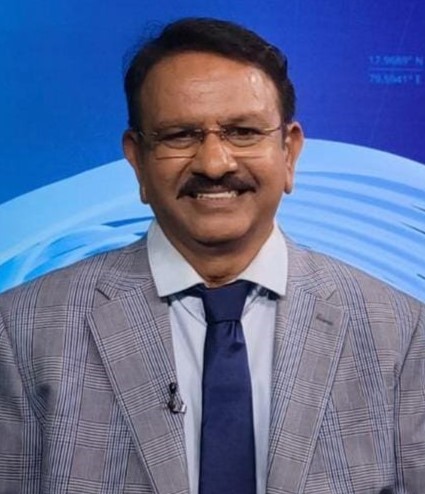
FOUNDER & CHIEF EXECUTIVE OFFICER
International Institute of Quality Accreditation & Rankings (IIQA)
L.L.B. | L.L.M. (Constitutional Law) | Ph.D.
IIM Ahmedabad Alumnus | President of India Medal Awardee
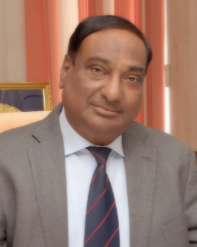
Expert in NBA & NAAC Accreditation, NIRF Rankings and UGC Requirements — Workshops & Mock Audits
Full Profile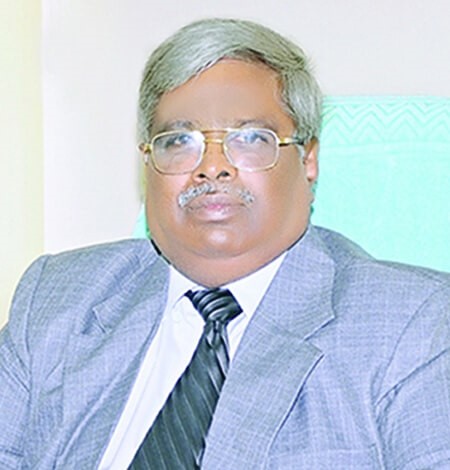
Expert in NAAC Accreditation & UGC Requirements — Workshops & Mock Audits
Full Profile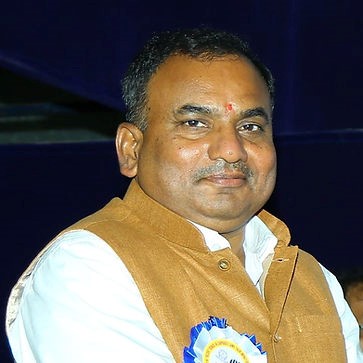
Expert in Legal Education & BCI Requirements — Workshops & Mock Audits
Full ProfileTell us your institution type, framework and current stage of preparation.
Tell us about your institution and the support you need.
Start WhatsApp ChatSend a detailed enquiry